

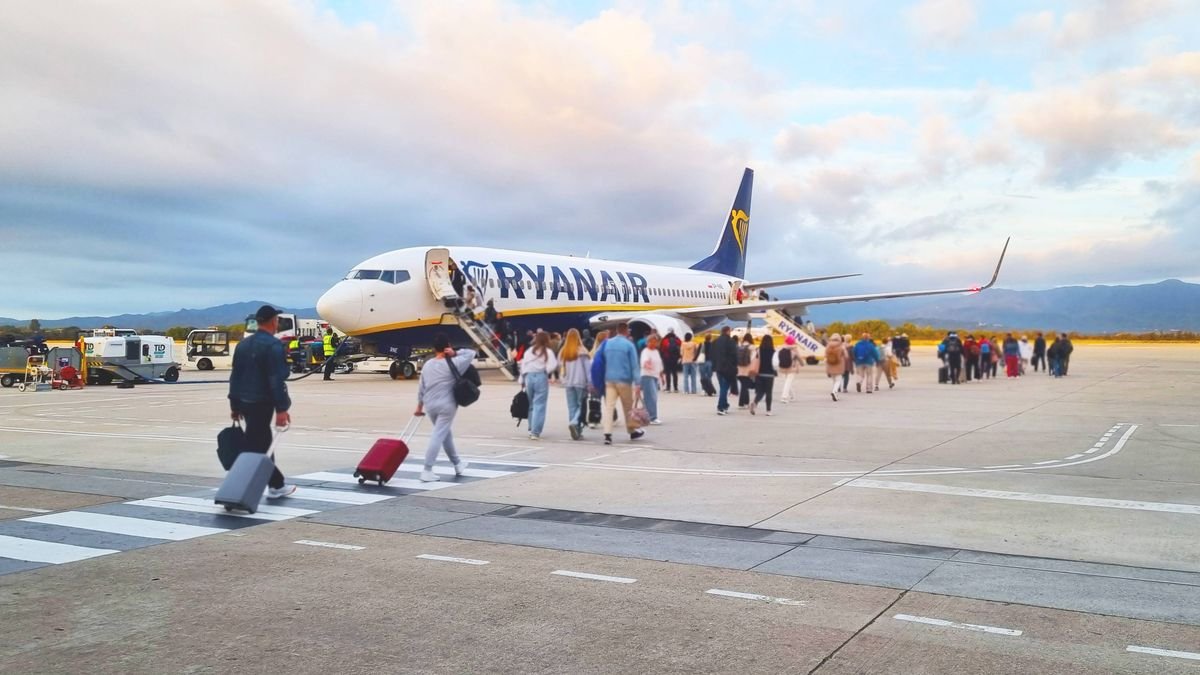
Ryanair has issued a caution for families going on summer trips. The low-cost airline has criticized the EU’s Entry/Exit System (EES), stating that the system is not adequately prepared for the summer holiday travel rush when numerous families will be journeying across Europe.
Ryanair has urged European governments to halt the implementation of EES until September to avoid passengers, many of whom are traveling with young children, enduring long waits at passport control. This call comes following a joint online letter by top airport and airline representative bodies, highlighting the critical delays caused by EES.
According to industry groups ACI Europe, Airlines 4 Europe, and the International Air Transport Association, passengers have faced extensive queues due to slow border control processes, resulting in flight delays and passengers missing flights. Recent incidents, such as the chaos at Athens Airport, where passengers missed Ryanair flights despite EES gates not being operational, have fueled concerns.
Ryanair has cautioned travelers about potential delays at passport control for non-Schengen destinations and advised arriving at the airport earlier. The airline highlighted that the current infrastructure lacks the capacity to handle the expected high passenger volumes during peak season due to staffing shortages and system unpreparedness.
Airports like Tenerife South, Palma, Alicante, Malaga, Milan Bergamo, Krakow, and Paris Beauvais are experiencing significant disruptions, with more congestion anticipated as summer intensifies. Ryanair’s Chief Operations Officer, Neal McMahon, emphasized the need to postpone EES implementation to prevent passengers and families from facing unnecessary stress and chaos during the summer travel peak, echoing calls made by other EU countries like Greece.
Ryanair is advocating for European governments to delay the EES rollout to protect passengers, families, and airport operations during the busy school holiday period, rather than subjecting holidaymakers to avoidable passport control disturbances.

