

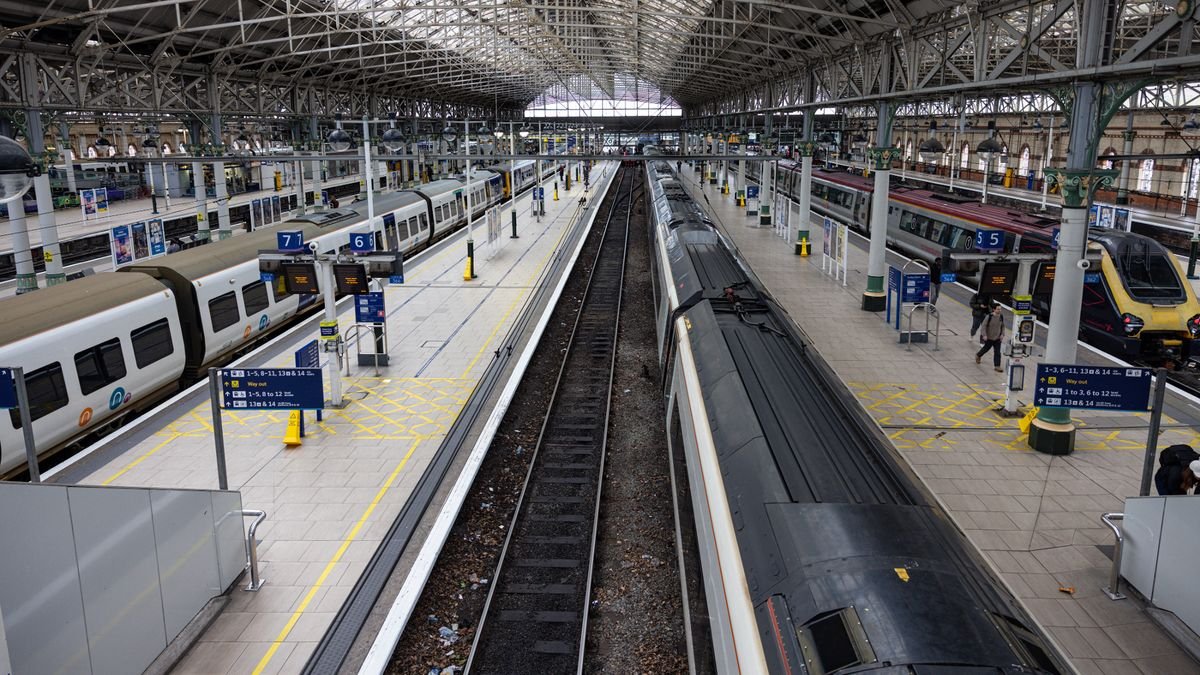
Plans to modernize aging rail services in the North of England are at risk of exceeding a £45 billion funding limit, according to a warning from Members of Parliament.
The Public Accounts Committee expressed concerns that the initiative to enhance poor northern rail connections could encounter similar issues as the troubled HS2 project.
MPs highlighted significant uncertainties surrounding the program, such as journey durations, service frequency, capacity, the specific route of the new line, construction responsibilities, and the prioritization of investment in urban and industrial development.
Initially introduced as Northern Powerhouse Rail (NPR) by the Conservative government in 2014, subsequent administrations have altered its scope and impeded progress, according to MPs.
While they appreciated the Labour Party’s revival of the project with a £45 billion funding cap, doubts remain about the Department for Transport’s ability to apply lessons from past failures.
The initiative’s objectives include enhancing connections between Sheffield and Leeds, Leeds and York, and Leeds and Bradford by the 2030s. A subsequent phase envisions a new route connecting Liverpool and Manchester via Manchester airport and Warrington, utilizing a mix of existing and new tracks. The final phase aims to improve connections eastward from Manchester to Leeds, Bradford, Sheffield, and York.
Clive Betts, Deputy Chair of the Public Accounts Committee, remarked on the government’s commitment to bolstering northern transportation infrastructure. However, he cautioned against the resemblance between NPR’s governance challenges and those faced by HS2.
He further highlighted concerns about HS2’s involvement in developing NPR plans, questioning the transparency of the project’s £45 billion funding cap.
Responding to the criticisms, a Department for Transport spokesperson emphasized that NPR represents a significant investment in rail connectivity for the North, fostering growth, job creation, and investment in the region. They underscored a disciplined approach and collaborative decision-making process with stakeholders to ensure project success.
Since the project’s announcement, collaborative efforts with local authorities have progressed, with joint partnership forums overseeing the next phases of development and Network Rail advancing engineering designs.

