

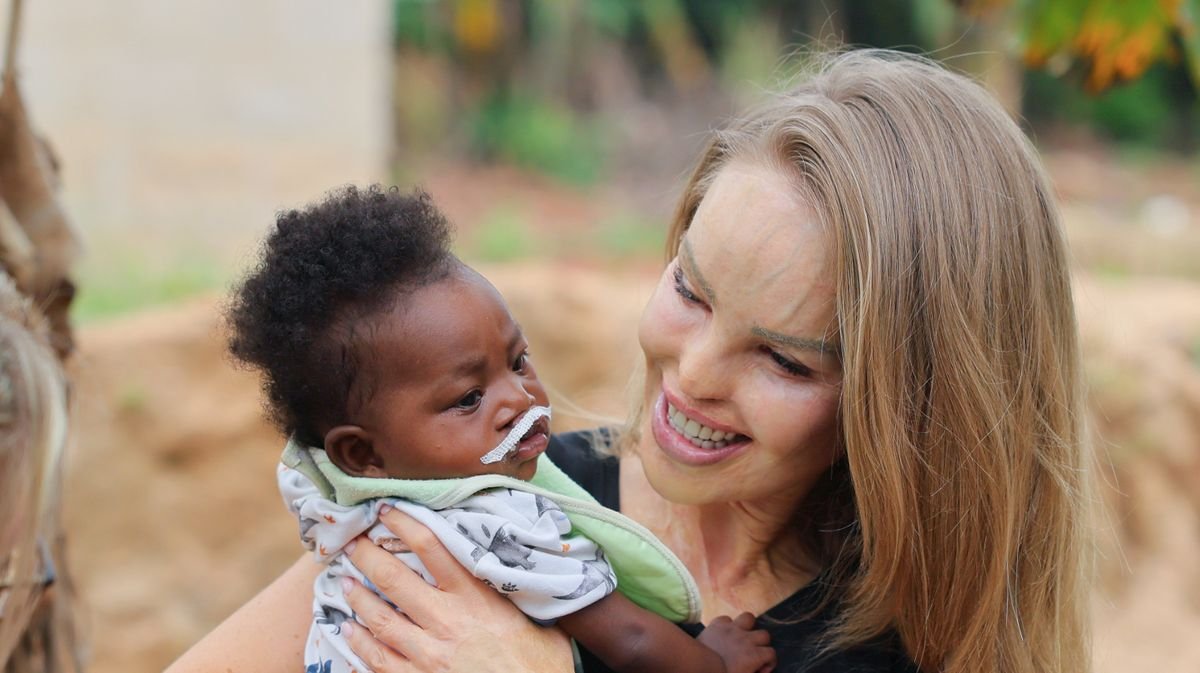
A sense of disgrace often covers the families of children born with a cleft lip or palate in developing nations, with some viewing it as a curse. Katie Piper, a 42-year-old mother of two, was deeply moved during her visit to Kumasi, Ghana, as an ambassador for the Smile Train charity, where she met children and families affected by cleft palates.
Having survived an acid attack in March 2008, Katie’s personal experience with facial differences allowed her to empathize with the challenges faced by cleft children and their families. She learned about the stigma surrounding cleft conditions, with stories of babies being suffocated or drowned at birth, and mothers being labeled as cursed due to misconceptions about the cause of clefts.
Smile Train, the largest cleft-focused organization globally, supports local healthcare professionals in over 75 countries by offering free, safe, and high-quality cleft lip and palate surgeries, along with comprehensive care for children in need.
Recognized with an OBE in 2022 for her philanthropic efforts, Katie shared the story of meeting Richlove Amoateng, a five-month-old baby with a cleft, and her mother in a rural village outside Kumasi. Before receiving assistance from Smile Train, the mother had kept the baby hidden at home due to community stigmatization.
A cleft lip is a congenital condition where the upper lip has a gap or split, often accompanied by a cleft palate, affecting approximately one in 700 newborns annually worldwide. While the exact cause remains uncertain, it is believed to have genetic links rather than being a result of actions during pregnancy.
In less developed countries like Ghana, lack of awareness leads to shame being associated with cleft children, who may face difficulties with eating, breathing, and speaking without proper treatment. Katie emphasized the importance of early intervention and support, highlighting the transformative impact of a single surgery on the lives of cleft patients.
Through her foundation established in 2009, Katie supports adult burn survivors and individuals with severe trauma scarring, emphasizing the importance of addressing both physical and mental health challenges. Reflecting on her own journey of over 400 surgeries following the acid attack, Katie stresses the significance of accessible healthcare services and the need to protect public healthcare systems like the NHS.
Posing a message to raise awareness and advocate for equal healthcare access, Katie shares her belief in the essential role of the NHS as a safety net for individuals in times of need. Drawing parallels between her experiences and those of cleft children, she underlines the importance of resilience and the value of compassionate healthcare systems in providing essential care to all individuals.

