

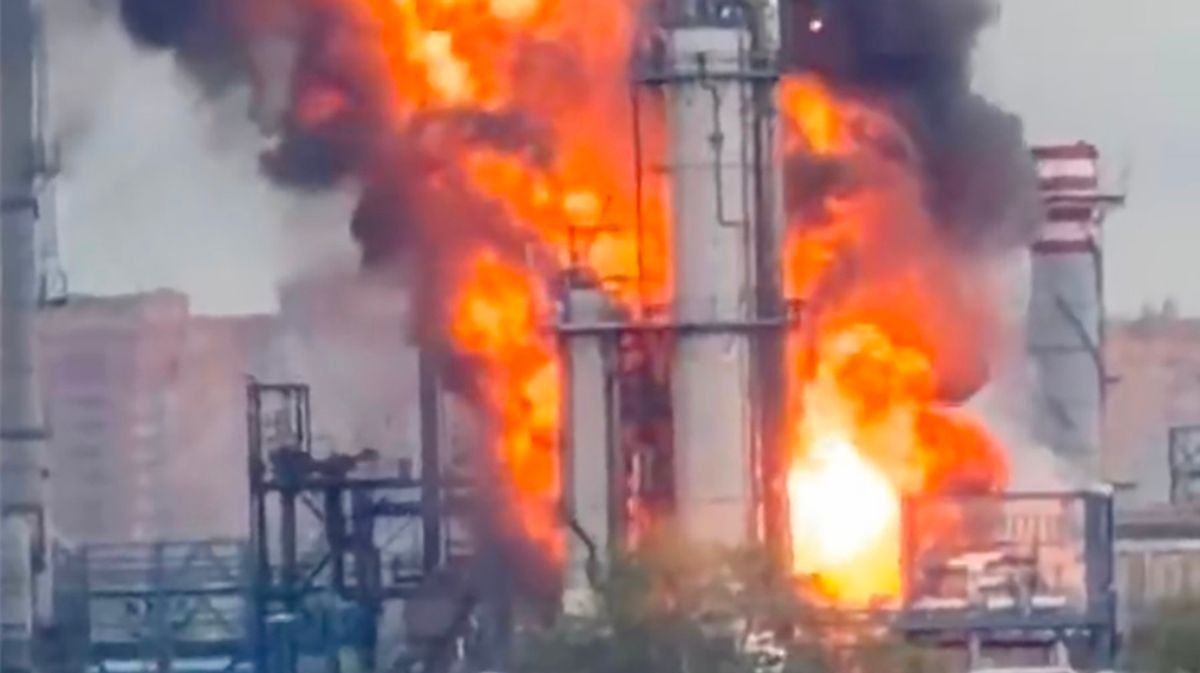
Vladimir Putin faced a significant setback when a large-scale drone attack targeted the primary oil refinery in Moscow, leading to the closure of the city’s main airports. The Kapotnya Oil Refinery, located just ten miles from the Kremlin, was engulfed in flames, causing smoke to fill the city as drones penetrated enhanced air defenses in the Russian capital. This incident coincided with the G7 summit in France.
The strike dealt a severe blow to the Kremlin, particularly as Ukraine’s ongoing campaign targeting oil facilities has begun to impact the Russian economy, casting doubt on Putin’s control over occupied Crimea. Consequently, all major Moscow airports – Domodedovo, Sheremetyevo, Vnukovo, and Zhukovsky – suspended flights, resulting in travel disruptions.
The drone assault during breakfast hours marked one of the most intense attacks on Moscow in the four-year conflict. Meanwhile, during his journey to the G7 summit, Ukrainian President Volodymyr Zelensky disclosed that Putin had turned down a new peace proposal from Ukraine, indicating his reluctance to engage in meaningful negotiations to end the war.
Moscow’s Mayor Sergei Sobyanin, an ally of Putin, stated that approximately 60 drones had been downed, with some causing damage to the refinery but without any reported casualties. The Kapotnya refinery plays a vital role in supplying fuel to Moscow, accounting for a significant portion of the capital’s fuel market and surrounding areas, despite recent efforts to bolster the city’s air defenses.
The attack on the refinery, which is among the most fortified in Russia, underscored the persistent threat posed by Ukrainian drones in Moscow’s airspace. Additionally, residential buildings in the Elektrostal suburb and Kotelniki district were struck by drones, showcasing the widespread impact of the assault.
Furthermore, Ukraine’s strategic strikes on Russia’s oil infrastructure are gradually undermining the Russian economy, leading to fuel shortages in numerous regions. Notably, Ukraine’s actions have impeded fuel supplies to Crimea and other occupied territories, causing disruptions and shortages. The situation has escalated to the extent that farmers in Siberia are expressing concerns about inadequate fuel supplies for the upcoming harvest due to persistent shortages.
In a separate development, Russia targeted Ukraine with ballistic missiles and drones, resulting in civilian casualties and further escalating tensions in the region. The ongoing clashes highlight the escalating conflict between the two nations and the broader implications for regional stability and security.

