

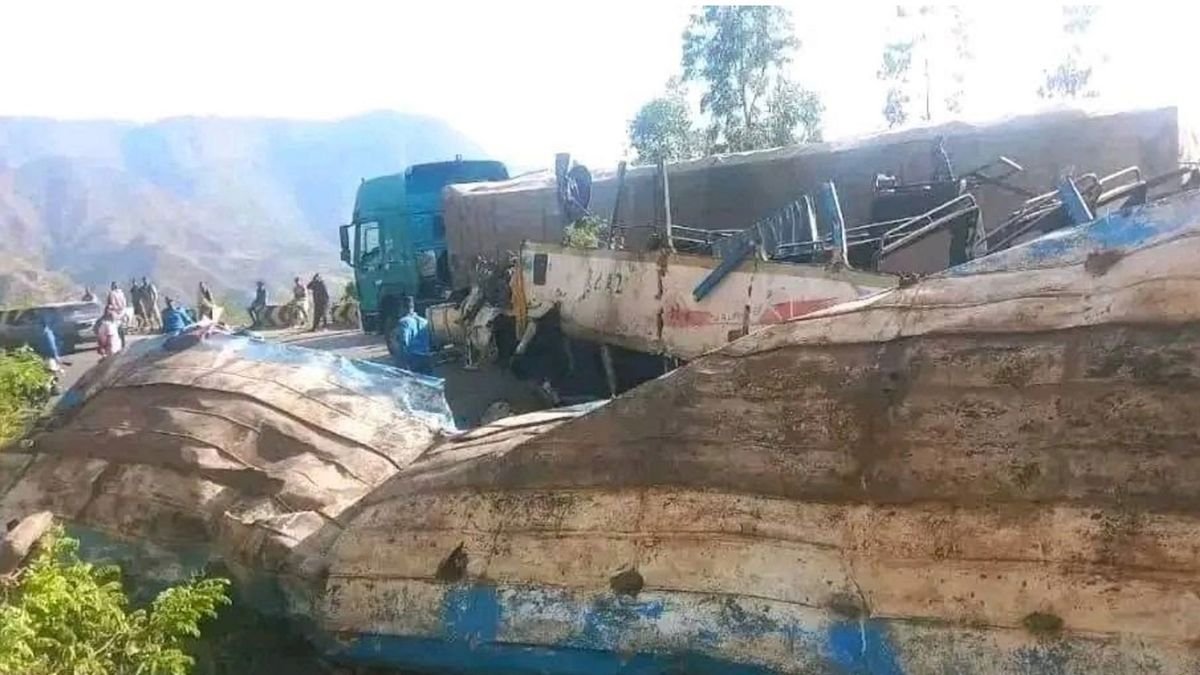
At least 31 individuals lost their lives, with 33 others sustaining injuries, following a tragic incident in Ethiopia where a bus careened off a cliff into a ravine, as confirmed by local authorities. The bus, en route from Dessie to Addis Ababa, veered off the road in the early hours of Monday and plummeted down a cliff in the northern Amhara region, as reported by state-run Amhara Media Corporation.
The fatal crash occurred along the route leading to Kombolcha, stated commander Getachew Muhiye, as disclosed in a message from the regional government’s communications bureau. Among the 31 fatalities was the driver, while 33 others suffered varying degrees of injuries, as per Mr. Muhiye’s statement to state media. The death toll had initially been reported as 28.
Tragically, many victims perished due to delays in emergency response services in the area, which lacks sufficient infrastructure and ambulance facilities, resulting in survivors needing transportation in public vehicles.
The location of the accident, characterized by treacherous hilly terrain, is notorious for its hazardous conditions. The cause of the tragic incident is currently under investigation.
This catastrophe comes in the wake of a previous tragedy in December 2024 when 71 individuals lost their lives in Ethiopia’s southern Sidama region after a truck plunged into a river. The overcrowded vehicle fell from Gelan Bridge while traversing a route known for previous serious accidents, as attested by local residents.
The delayed rescue operations in the remote region were cited as a significant factor contributing to the high casualty count. Villagers expressed their frustration, mentioning that they were only equipped with sticks to aid in the rescue efforts from the fast-flowing river.
A witness, Serak Boko, recounted that moments before the crash, loud music was playing from the truck, and individuals in formal attire were dancing and waving.
In rural Ethiopia, trucks are often chosen over buses for social gatherings like weddings due to cost-effectiveness and higher passenger capacity. The majority of the passengers were men, traditionally accompanying the bride from her family residence to the groom’s abode.
“The area is prone to frequent accidents near the river due to poor construction,” remarked resident Fasil Atara, highlighting the absence of speed bumps and warning signs along the road.

