
Newly Obtained Documents Reveal Unprecedented Fish Event Challenged Reactor Safety at Canada’s Largest Nuclear Power Plant
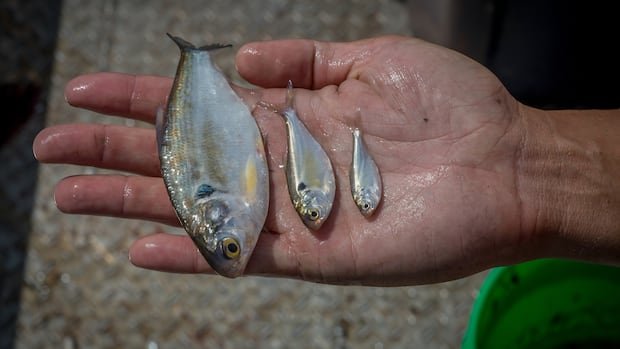
A recent study has uncovered the extraordinary nature of a fish occurrence at Bruce Nuclear Generating Station, Canada’s largest nuclear power plant, that posed a significant challenge to reactor safety. In February 2025, an influx of gizzard shad overwhelmed the cooling systems at the plant, leading to the shutdown of one reactor and a decrease in power output at another, while also resulting in dead fish being found along Lake Huron’s shores for several days.
According to over 1,200 pages of federal and provincial records obtained by CBC News, the event highlighted how an environmental anomaly involving the cold-sensitive gizzard shad tested the plant’s capabilities in unforeseen ways. Bruce Power, the operator of the facility, declined an interview but released a written statement without addressing specific questions from the news outlet.
The investigation conducted by Bruce Power identified the incident as a “novel environmental event,” while the Canadian nuclear regulator described it as an unprecedented volume of gizzard shad that overwhelmed the plant’s fish deterrent systems. A subsequent report by the Canadian Nuclear Safety Commission (CNSC) warned of potential severe consequences, including the shutdown of all four units at the facility.
The sheer magnitude of the fish event was staggering, with an estimated 8.1 million gizzard shad congregating near the plant on a single day in February 2025. The extreme winter conditions, including cold shock among the fish due to near-freezing water temperatures, led to the mass die-off. Experts noted that the warmer winters preceding the event may have contributed to the unusually large population of gizzard shad in the area.
The fallout from the incident not only impacted the plant’s operations but also had repercussions on the grid, with a reactor shutdown requiring several days to restart and posing challenges to the electricity supply in Ontario. This event at Bruce Power reflects a broader trend of environmental conditions disrupting nuclear plant operations globally, underscoring the need for enhanced monitoring and preventive measures to mitigate such risks.
In response to the incident, Bruce Power has invested nearly $10 million in mitigation efforts and research aimed at preventing future disruptions caused by mass fish events. The company has implemented various measures, including physical barriers, acoustic deterrents, and advanced monitoring systems to safeguard the plant from similar incidents in the future. As the reliance on nuclear power for low-carbon electricity generation grows, ensuring the uninterrupted operation of nuclear plants amidst changing environmental conditions becomes increasingly crucial.

