

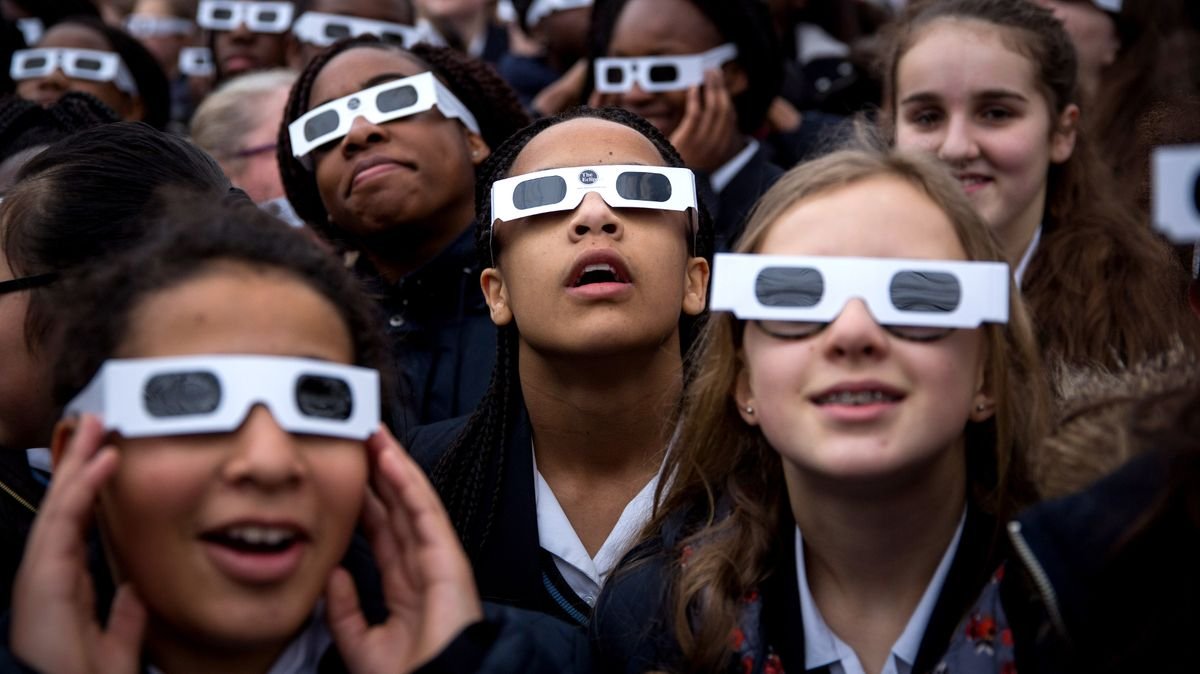
As a highly anticipated solar eclipse approaches the UK, enthusiasts are seeking safe viewing methods to witness the event. Health professionals caution against using regular sunglasses due to the risk of harmful solar radiation exposure.
Various alternatives, such as special glasses and homemade pinhole viewers, offer safe ways to enjoy the upcoming partial solar eclipse on August 12, with approximately 90% coverage expected across Europe. A total solar eclipse, fully obscuring the Sun, will be visible in select regions like Spain, Greenland, and parts of Russia and Portugal.
Timings for the eclipse will vary by location, starting around 6.17pm in London, Bristol, and Cardiff, with peak coverage around 7.12pm and conclusion by 8.06pm. Cornwall is set to see around 95% coverage at 7.16pm, offering the most extensive viewing opportunity in the UK.
Experts emphasize the importance of proper eye protection during the eclipse, highlighting the inadequacy of standard sunglasses. Specially designed eclipse glasses or handheld solar viewers, significantly darker than regular eyewear, are recommended by NASA and the UK Health Security Agency (UKHSA) to prevent eye damage.
The occurrence of a solar eclipse results from the Moon blocking sunlight from reaching Earth, causing a darker sky and reduced Sun brightness. Despite the dimmer appearance, the Sun still emits harmful radiation that can harm the eyes, as cautioned by the UKHSA.
Past incidents, such as the 1999 solar eclipse, saw cases of vision issues among viewers, even those observing for a brief period. NASA advises against using optical devices like cameras and binoculars with eclipse glasses, as concentrated solar rays can cause severe eye injuries.
Properly fitting front-mounted solar filters on optical equipment is crucial to prevent damage from the Sun’s intense rays. Additionally, checking eclipse glasses for any defects before use is recommended by experts.
For those without eclipse glasses, alternative safe viewing methods include DIY options at home. Online live webcasts from entities like the European Space Agency and NASA offer remote viewing opportunities for the eclipse, ensuring a safe and enjoyable experience for all.

