
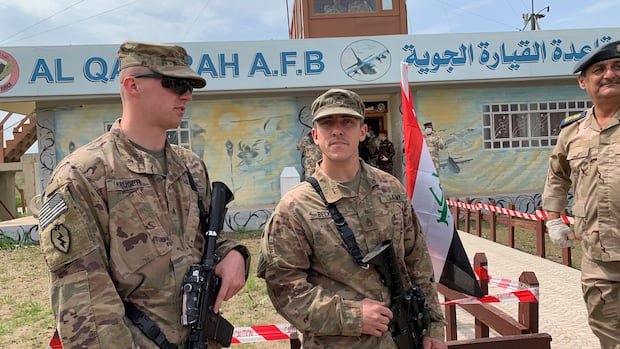
U.S. troops are preparing to leave their final bases in Iraq by Wednesday, marking a significant moment hailed as a win by Iran and its supporters. This move grants Iran and its allies extensive influence in a nation where over 4,500 American soldiers perished in a conflict spanning more than two decades.
Experts in Iraqi security suggest that the withdrawal, scheduled in 2024 under President Joe Biden’s administration and executed by Donald Trump’s government amid ongoing tensions with Iran, may potentially empower Tehran and its allies while allowing other adversaries of the U.S., such as the Islamic State, to resurface.
Abu Mojtaba al-Yasiri, a commander within the Iraqi Islamic Resistance, a coalition of Iran-backed armed factions, characterized the departure of U.S. forces as a monumental triumph for Iraqi resistance groups and the nation’s people. He emphasized that the withdrawal signifies a turning point in Iraq’s history, highlighting the failure of foreign occupation to dictate the country’s destiny.
Although the exit of U.S. forces garners broad support among Iraqis, concerns persist among those apprehensive about the strength of Iran-aligned factions, viewing the withdrawal as premature. Sunni tribal leader Abdulrahman al-Zobaie from Fallujah, a former stronghold of anti-American sentiment, voiced reservations about Iraq’s readiness to assume full security responsibilities at this juncture.
The U.S. military’s involvement in Iraq, which commenced with the 2003 invasion to depose Saddam Hussein, led to a prolonged occupation, the establishment of a Shia-led government, and a protracted counterinsurgency effort culminating in the 2011 withdrawal. American forces returned to aid Iraqi troops in combating the Islamic State from 2014 to 2017, resulting in more American casualties compared to the parallel conflict in Afghanistan.
In recent years, Iraq has maintained close ties with both the U.S. and Iran, serving as a conduit for their geopolitical maneuvers. Tensions escalated with the U.S. assassination of top Iranian commander Qasem Soleimani in 2020, followed by subsequent attacks on American bases by Iranian proxies. The recent conflict with Iran saw a notable portion of U.S. casualties occurring in Iraq, the latest being an army sergeant’s death during a drone detonation near Erbil in July.
Iran views the U.S. withdrawal from Iraq as a triumph for its regional alliance of armed groups, aiming to expel American forces from the Middle East entirely. Iranian officials anticipate enhanced security in Iraq post-American departure, aligning with their strategic objectives.
There are concerns that the vacuum created by the U.S. exit could embolden the Islamic State remnants, who still maintain a clandestine network despite the defeat of their self-proclaimed caliphate years ago. Iraqi security forces have identified potential suicide attacks planned by ISIS cells to coincide with the withdrawal, underscoring the persistent threat posed by the militant group.

