

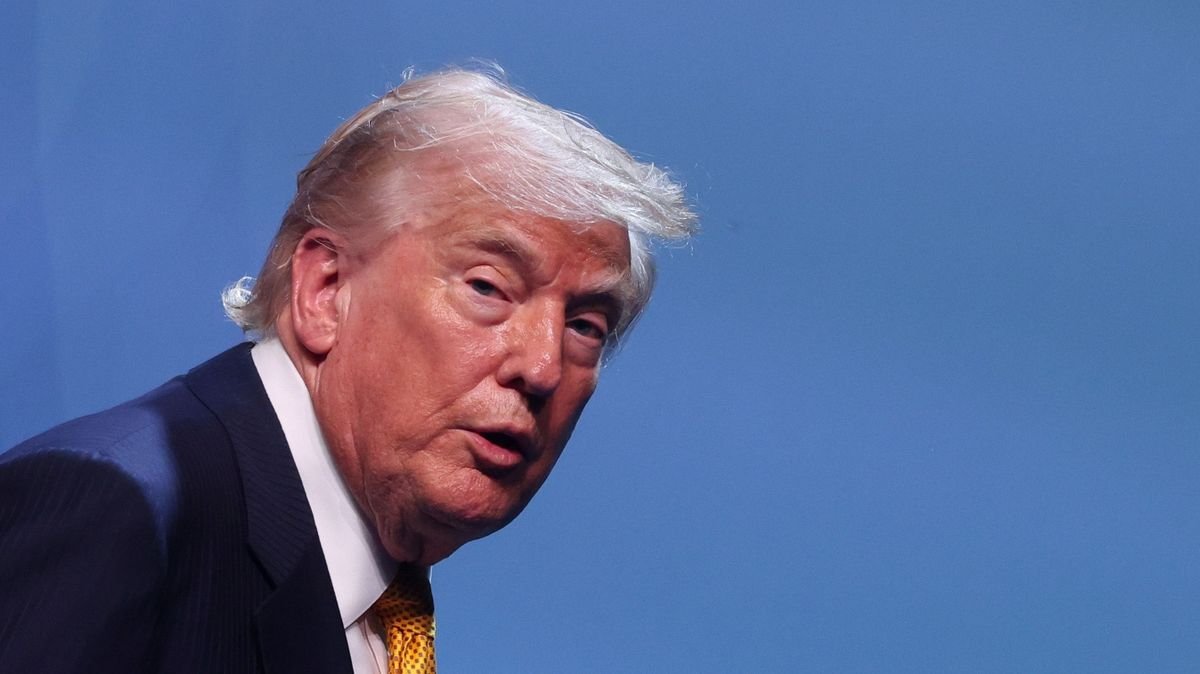
Donald Trump commenced the week by traveling to Turkey for the NATO summit and concluded it with a visit to the hospital.
The reason behind Trump’s decision to undergo another physical exam just 47 days after his previous one remains unclear. This occurrence has raised various inquiries this week, with the White House showing reluctance to provide explanations. Notably, the White House has refrained from clarifying why Trump discreetly changed planes during a layover in rural England on his way back from the summit, even resorting to involving the FBI in interrogating journalists who covered the story.
The events of this week have marked a pivotal period in Trump’s second term as President. Observers were taken aback to witness Donald Trump departing the NATO summit in Ankara aboard the traditional duck-egg blue Air Force One, despite arriving in a new luxury jet gifted by Qatar.
Trump had announced on the Truth Social platform prior to his departure that he was dispatching the new jet to RAF Mildenhall in England for refueling, intending to offer a tour of the aircraft to US troops stationed there. Consequently, he chose to fly from Ankara to Suffolk on one of the older planes for sentimental reasons.
Although Qatar Force One had been pre-positioned at Mildenhall, Trump switched to the new jet upon landing to complete the journey back to Washington, DC. The switch was necessitated by security concerns, especially considering the ongoing military actions involving Iran. While the new jet had been outfitted with luxurious amenities, it might have lacked the requisite security features for a safe intercontinental flight, particularly departing from a country bordering Iran.
During the return leg from Suffolk to Washington, Trump adamantly dismissed any security apprehensions related to the new jet. However, reports from The New York Times suggested that the Secret Service had advocated for the plane switch due to concerns regarding the rushed introduction of the new jet into service, potentially compromising security measures compared to the older fleet.
Furthermore, recent developments revealed that several Times reporters had been summoned to testify before a New York Grand Jury, with FBI agents reportedly visiting some journalists’ residences. These actions transpired shortly after FBI Director Kash Patel was summoned to the White House to discuss an inquiry into the leak concerning Air Force One.
Trump reportedly expressed frustration over the disclosure that Qatar Force One did not meet Air Force One standards, despite the predictability of such information becoming public. The controversy escalated when a dispute arose regarding Keir Starmer’s diplomatic intervention to adjust the timing of a sports match in Mexico due to an impending thunderstorm. Andrew Giuliani, leading Trump’s World Cup task force, criticized Starmer for purportedly endangering lives by attempting to alter the match schedule.
Interestingly, it was revealed that Trump had made a similar decision just a day earlier when he disregarded advice to cancel a Fourth of July speech due to nearby thunderstorms. Although lightning was visible during the event, Trump proceeded with the speech, showcasing his disregard for potential risks.
Moreover, Trump’s interactions during the NATO summit in Ankara drew significant attention. His prolonged and unpunctuated remarks, including comments on attacking Iran, disparaging Iran’s leadership, expressing dissatisfaction with NATO, and advocating for US control over Greenland, raised concerns about his mental state.
In a separate incident, Trump mistakenly referred to Ukraine’s President Zelensky as “President Putin” during a press conference, drawing parallels to a similar blunder made by Joe Biden in the past. The incident added to growing scrutiny over Trump’s cognitive abilities and overall fitness for presidency.
Amidst these events, Trump’s visit to Walter Reed Military Hospital for another physical examination, his fourth in recent times, has sparked speculation about his health and well-being. The repeated hospital visits, coupled with his recent public appearances, have fueled discussions about his physical and mental condition.
In addition to these occurrences, Trump’s exercise of executive powers to reshape government bodies, exemplified by his actions dismantling the Election Assistance Commission, has raised concerns about potential impacts on election processes and voter rights. His push for legislative changes through the SAVE America Act faces significant hurdles in Congress, given the lack of sufficient support for the proposed reforms.
Furthermore, Trump’s recent standoff over the Housing bill reflects his strategy of leveraging his executive authority to influence legislative outcomes. By withholding his signature on the bill, he aims to exert pressure on lawmakers regarding the SAVE America Act, emphasizing the importance of his proposed reforms.
Overall, the series of events involving Trump’s health, diplomatic engagements, policy decisions, and executive actions underscore the complex and contentious dynamics characterizing his presidency.

