

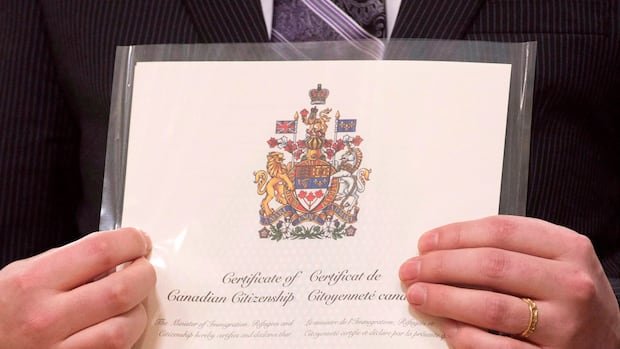
Applications for Canadian citizenship certificates from individuals globally have seen a sharp increase in recent months, with a significant number coming from the United States, as per information obtained by CBC News. The implementation of Bill C-3, also known as the “Lost Canadian” legislation, has led to a surge in the number of certificates issued to individuals who can trace their lineage back to a Canadian ancestor, even if that ancestor emigrated generations ago.
Between mid-December and May 31, around 6,100 citizenship certificates were granted to those meeting the new criteria, marking a substantial rise from the previous period. Additionally, 17,390 individuals have acquired certificates due to having a Canadian parent, a requirement that was in place before the adoption of Bill C-3.
While the newly recognized citizens can now apply for Canadian passports and reside and work in Canada, they are ineligible to vote in federal elections unless they have lived in the country at some point in their lives. Notably, Americans constitute a significant portion of those who have been granted Canadian citizenship certificates under the new legislation.
However, the influx of applications has overwhelmed the system, with a substantial backlog of around 121,800 pending decisions reported by the Immigration, Refugees and Citizenship Canada (IRCC). The processing time for applications has also doubled, now estimated at 25 months compared to 12 months previously.
The potential pool of individuals who may qualify for Canadian citizenship under Bill C-3 is significant, with estimates ranging from hundreds of thousands to as many as 115,000 individuals. Despite initial expectations of moderate application volumes, the surge has prompted IRCC to adjust its operations to manage the increased demand efficiently.
Meanwhile, a surge in requests for genealogical records needed to prove descent from a Canadian ancestor has put a strain on Canada’s archivists. The Association of Canadian Archivists has reported a substantial rise in requests, with some institutions experiencing a 100 to 300 percent increase. As the demand for records grows, the association is advocating for increased funding to support archives in meeting the requirements created by Bill C-3.
The uncertainty surrounding the acceptance of documents and recent suspensions of issued certificates have added complexity to the process, raising concerns among archivists and applicants alike. As the situation evolves, stakeholders are closely monitoring developments and advocating for measures to ensure the efficient processing of applications and the preservation of the integrity of the citizenship program.

