

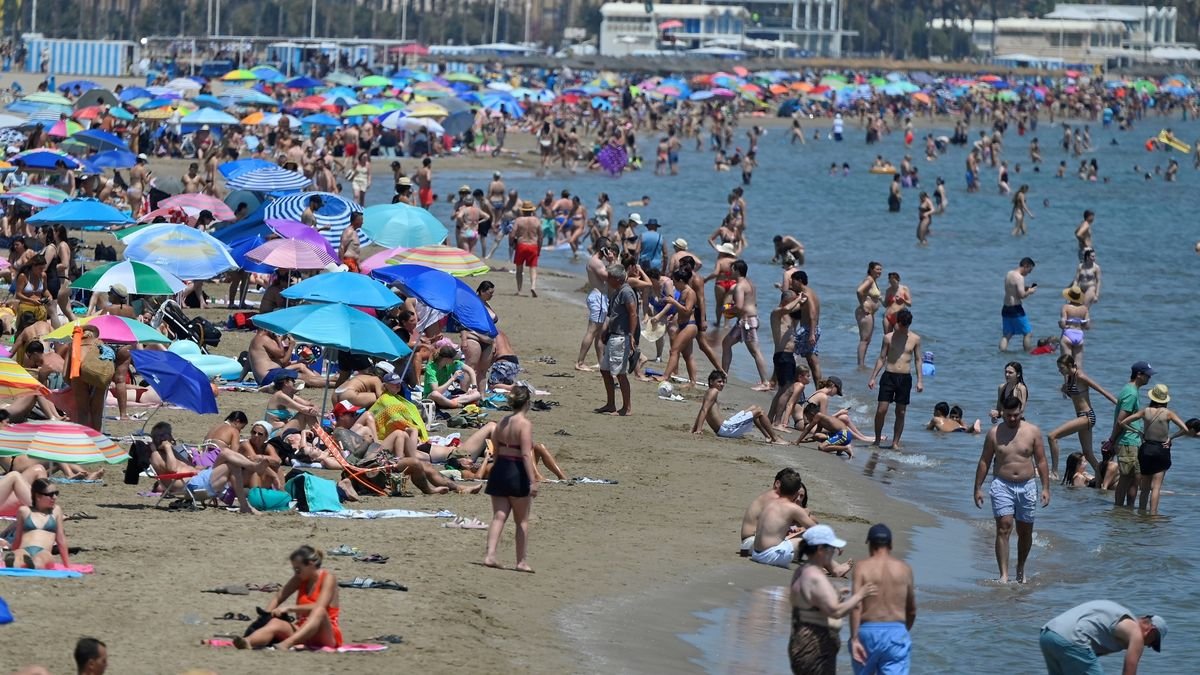
Spain is bracing for scorching temperatures above 45C as certain regions of the Iberian peninsula prepare for another heatwave. Aemet, Spain’s meteorological authority, has announced that the heatwave will be in effect from Tuesday, July 21, until at least Thursday, July 23. Hugo Morán, the president of Aemet and Spain’s secretary of state for the environment, stated that the country is experiencing a series of consecutive heatwaves.
The upcoming heatwave will impact southeastern Spain, the Guadalquivir valley, Ebro valley, northeastern depressions, Pyrenees valleys, and inland Mallorca. Aemet has attributed this weather pattern to a stationary cut-off low in the northwest of the Iberian Peninsula, coupled with a mid-level high over North Africa, resulting in warm, dry air laden with suspended dust infiltrating southeastern Spain and the Balearic Islands.
The agency warns of a “significant or even extraordinary” risk to individuals engaging in outdoor activities and vulnerable populations, such as the elderly or those with cardiovascular conditions. While the end date of the heatwave remains uncertain due to various factors, Aemet anticipates that temperatures will remain dangerously high until the following weekend.
Monday will witness high temperatures in the eastern and southeastern parts of the peninsula and the Balearic Islands, ranging from 36-38C, with some areas reaching 40C. On Tuesday, temperatures could soar up to 42C in low-lying regions and inland Mallorca, with temperatures hitting 39C in other affected areas. The peak of the heatwave is expected between Wednesday and Thursday, according to Aemet.
Temperatures will continue to climb along the Mediterranean coast on Thursday due to westerly winds, reaching a high of 44C. Aemet suggests the possibility of a cooler air mass arriving from the northwest of the Iberian Peninsula on Friday, potentially leading to a general temperature drop in the subsequent days. However, there is a chance that the heatwave may persist if the cooler air mass is delayed.
Spain’s health ministry advises the public to stay hydrated, keep cool, and avoid direct sun exposure during peak daytime temperatures, especially vulnerable groups like the elderly, pregnant women, young children, individuals with chronic illnesses, and outdoor workers. This marks Spain’s third heatwave this summer, intensifying the risk of wildfires due to the extreme heat. Significant wildfires are already raging in Zaragoza and Guadalajara.
Euronews reports that two major forest fires are currently burning out of control in Spain, with one near Orés, Zaragoza, consuming approximately 15,400 hectares, while another in Sierra Norte de Guadalajara has affected around 6,000 hectares. This year’s average temperature has surpassed the previous record set in 2024 by 0.4C, with temperatures running 3.3C above normal values between June 1 and July 15.

