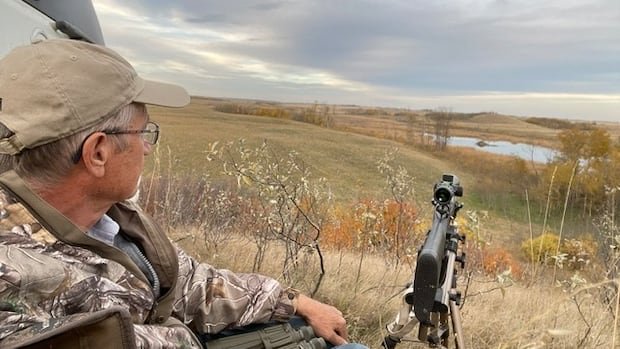
After starting his hunting journey in Saskatchewan in 1971, Ken Erickson decided to cease pursuing certain animals due to concerns about chronic wasting disease. With the provincial program now coming to a close, many other hunters are contemplating a similar decision.
The Saskatchewan government recently announced the discontinuation of its chronic wasting disease testing program, citing low participation from hunters. This disease impacts the brains and nervous systems of cervids like deer, elk, and moose. While there have been no confirmed cases of transmission to humans, Erickson, whose wife is immunocompromised, prioritizes his family’s safety and prefers not to take any risks.
Hailing from Thunder Bay, Ontario, Erickson, who moved to Regina in the 1970s, has become an experienced hunter on the prairies. Despite finding big game hunting increasingly challenging with age, he still engages in bird hunting. Expressing a desire to hunt deer again, Erickson questions the decision to end the testing program, believing it to be politically motivated rather than science-based.
Darrell Crabbe, the executive director of the Saskatchewan Wildlife Federation, emphasized the importance of the testing program as a safety measure for hunters to ensure the safety of consumed meat. The government plans to monitor wildlife health and population through alternative methods following the program’s termination.
Chronic wasting disease has been detected in 63 of Saskatchewan’s 83 wildlife zones since data collection began. Mandatory testing zones must submit samples by October 31 for processing, while voluntary submission zones will no longer undergo testing. Despite some criticisms regarding delays and program effectiveness, Crabbe stresses the need for continued vigilance in wildlife management.
Ryan Brook, a professor at the University of Saskatchewan, expressed surprise at the sudden termination of the program, emphasizing the importance of ongoing data collection. Concerns have been raised about the potential consequences of halting the testing program, including increased disease spread and adverse impacts on hunting communities.
As hunters express disappointment and frustration over the decision, calls have been made for the government to reconsider and establish a wildlife advisory committee for improved coordination in the future. Despite the challenges, the hunting community remains hopeful for a solution that prioritizes both conservation efforts and hunting opportunities.