

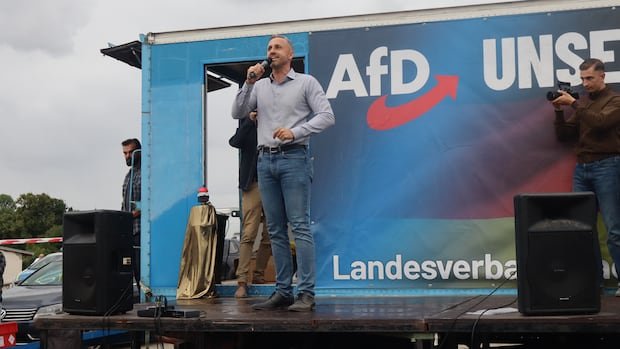
During a sunny August day in the peaceful town of Quedlinburg in eastern Germany, a multitude gathered to listen to a prominent far-right leader discuss the nation’s future.
Many attendees arrived on their Simson motorcycles, a symbol closely associated with the Alternative for Germany (AfD) party, to meet Ulrich Siegmund, the AfD’s contender for leadership in the state of Saxony-Anhalt.
The party is experiencing a surge in popularity according to opinion polls, and in an upcoming regional election, it could potentially be the first far-right party to wield state authority in Germany since World War II.
Analysts suggest that if the AfD attains power, it would have substantial influence over state resources, particularly in fields like education. Their objectives include implementing measures such as segregated classrooms for refugees, normalizing ties with Russia through student exchange initiatives, and promoting a patriotic agenda that shifts the focus away from the nation’s historical ties to Nazism.
“I believe [Siegmund] expresses our sentiments straight from the heart,” remarked 17-year-old Luca Stemmler during the assembly in Quedlinburg.
“To me, he’s an inspiration.”

Opposite the motorcycle rally, counter-demonstrators brandished rainbow flags and sang The Beatles’ “All You Need Is Love” as a display of solidarity against a party that some fear may challenge fundamental human rights and reshape critical aspects of Germany’s postwar democratic structure.
“I see this potentially having repercussions not only across Germany but also within the European Union and globally,” remarked Marcus Böick, a historian from Saxony-Anhalt affiliated with the University of Cambridge.
“Once they secure power, it becomes extremely challenging to remove them.”
Overview of AfD’s Potential in State Governance
Mainstream political parties in Germany maintain a stance of non-collaboration with extremist groups, known as “the firewall,” aimed at safeguarding the postwar democratic order. If the AfD’s standings in opinion polls materialize into votes — a possibility, though not a certainty according to experts — it might be challenging for other parties to prevent the AfD from entering the state government.
In Saxony-Anhalt, the AfD leads in opinion polls at 42%, as per a survey by German election research firm Infratest-Dimap, polling 1,511 eligible voters online and via phone between Aug. 24 and 25.
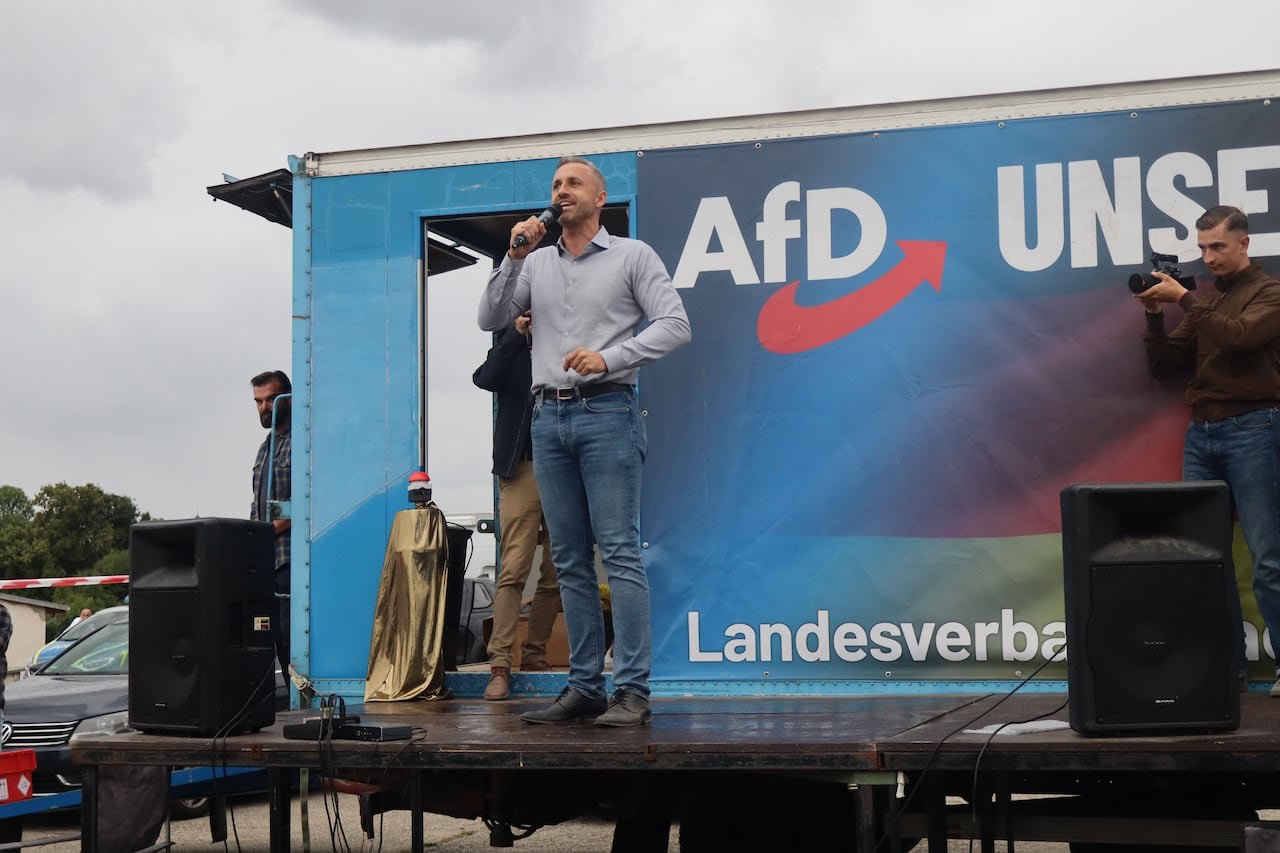
Nationally, the party also leads opinion polls at 28% according to Infratest-Dimap and secured the second-highest number of seats in the 2025 federal election.
Initially founded in 2013 as an anti-Euro party, the AfD shifted its focus to migration-related issues in 2015, following Chancellor Angela Merkel’s acceptance of a large number of refugees, mainly from Syria, into Germany.

