
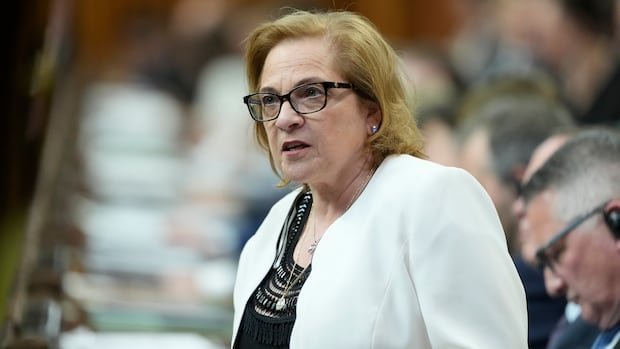
Refugee advocates express surprise at the reported lack of familiarity of the federal immigration minister with a key Supreme Court ruling pivotal to Canada’s refugee protection system. In an interview with Radio-Canada, Immigration Minister Lena Metlege Diab faced questions about the 1985 Singh v. Minister of Employment and Immigration case. This landmark decision affirmed asylum seekers’ Charter right to fundamental justice, leading to the establishment of the Immigration and Refugee Board of Canada.
The Singh ruling is central to the ongoing legal challenge against the Carney government’s immigration reforms, which impose restrictions on Refugee Board hearings eligibility. Gauri Sreenivasan, co-executive director of the Canadian Council for Refugees, expressed concern over the minister’s apparent lack of awareness of the Singh decision.
Diab, interviewed on Radio-Canada’s documentary podcast exploring Canada’s asylum system, fielded inquiries on topics like the Safe Third Country Agreement and Bill C-12, the government’s recent immigration reforms. Notably, one controversial aspect of C-12 is the shift towards pre-removal risk assessments for asylum claims filed more than a year after entering Canada, diverging from oral hearings before the Refugee Board.
Despite facing scrutiny over the alignment of Bill C-12 with the Singh decision, Immigration Canada asserts compliance with the ruling. Legal experts, however, contest this claim, arguing that the new law infringes on Canada’s legal obligations under domestic and international law. The interview raised questions about Diab’s understanding of critical legal precedents, prompting concerns about her competency in overseeing immigration matters.
Advocates and opposition parties have voiced criticisms of Diab’s handling of her portfolio, with calls for her dismissal persisting. The Prime Minister’s Office reaffirmed its support for Diab, emphasizing her role in executing the government’s immigration objectives. The minister’s alleged unfamiliarity with the Singh decision has sparked debates about her competence and grasp of key legal principles.

