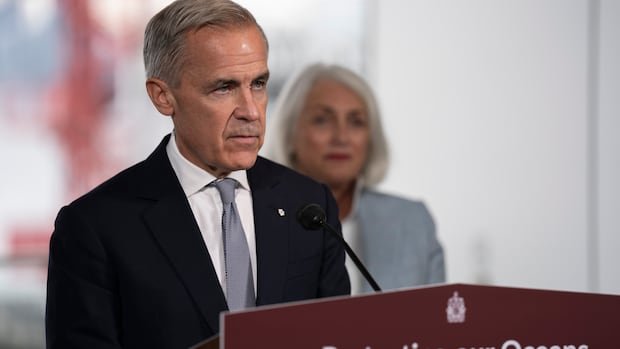
Prime Minister Mark Carney unveiled a $1.2 billion federal funding initiative for safeguarding oceans on Tuesday, coinciding with upcoming decisions concerning a new pipeline to the West Coast and the expansion of a key port in Metro Vancouver. Carney emphasized the potential impact of these major projects, foreseeing increased marine traffic that could strain the habitats under protection efforts. The allocated funds are designated for various initiatives, such as enhancing the Canadian Coast Guard’s monitoring capabilities, establishing a national near-shore weather forecasting system, and formulating a marine mammal oil spill response strategy.
Carney’s announcement in North Vancouver preceded a crucial deadline for Ottawa to determine the national interest status of a proposed pipeline linking Alberta and British Columbia’s southern coast. Highlighting the economic benefits and job creation potential of the project, Carney emphasized the importance of responsible development practices alongside economic growth initiatives. Additionally, he assured that the proposed pipeline route would avoid environmentally sensitive areas and align with existing infrastructure, while upholding the ban on tankers along B.C.’s north coast.
In parallel developments, the confirmation of LNG Canada’s Phase 2 expansion in Kitimat, B.C., was announced earlier in the day. Carney also expressed support for the planned expansion of the Port of Vancouver’s Roberts Bank terminal, aiming to diversify trade partnerships and bolster national sovereignty by reducing dependency on the United States.
With the anticipated rise in ship traffic at the Port of Vancouver, Carney stressed the need for enhanced marine protection measures, particularly for endangered species like the southern resident killer whales. Initiatives aimed at mitigating underwater noise pollution affecting marine life were highlighted, including a commitment to maintain noise levels at 2023 standards despite increasing vessel operations. Furthermore, funding has been earmarked for Indigenous-led stewardship projects, fisheries enforcement enhancements, and collaborative governance efforts in the Great Bear Sea region.
The funding announcement was welcomed by Coastal First Nations, recognizing it as a crucial step toward preparing for heightened vessel traffic and potential environmental impacts. However, environmental advocacy groups like the Wilderness Committee raised concerns about the adequacy of the allocated funds for ocean protection compared to the substantial investment in the Roberts Bank expansion. Additionally, critics pointed to potential conflicts with environmental protection measures in the government’s proposed Bill C-39, designed to bolster the economy.