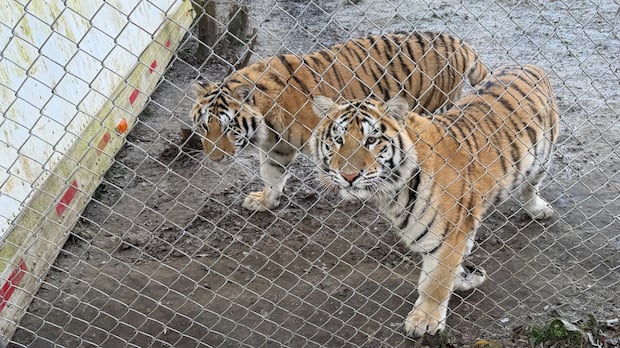
In Ontario, residents are permitted to have lions or tigers in their backyards, yet provincial officials lack information on the total number of these wild animals held in captivity throughout the province.
Ontario stands out as the only province in Canada without a licensing or permit system for the ownership of non-native wild animals, leaving it to local governments to determine which species can be owned by residents.
In Wainfleet, a rural area located 43 kilometers southwest of Niagara Falls, the presence of dangerous exotic animals became such a significant concern that the township established its own regulations in 2018, empowering local authorities to manage the situation more effectively.
Mark Tardif, the chief bylaw officer, is in charge of enforcing these regulations. His responsibilities have included overseeing a variety of exotic animals, including primates, sugar gliders (a type of gliding possum), pythons, and tigers.
“We’ve seen numerous tigers—probably five or six—along with a jaguar, lemurs, kangaroos, and water buffaloes,” he stated. “And unfortunately, a large number of snakes.”
His cases have involved multiple animal escapes from a roadside zoo named Ringtail Ranch, as well as a Wainfleet property this spring where a resident was found to be housing several tigers.
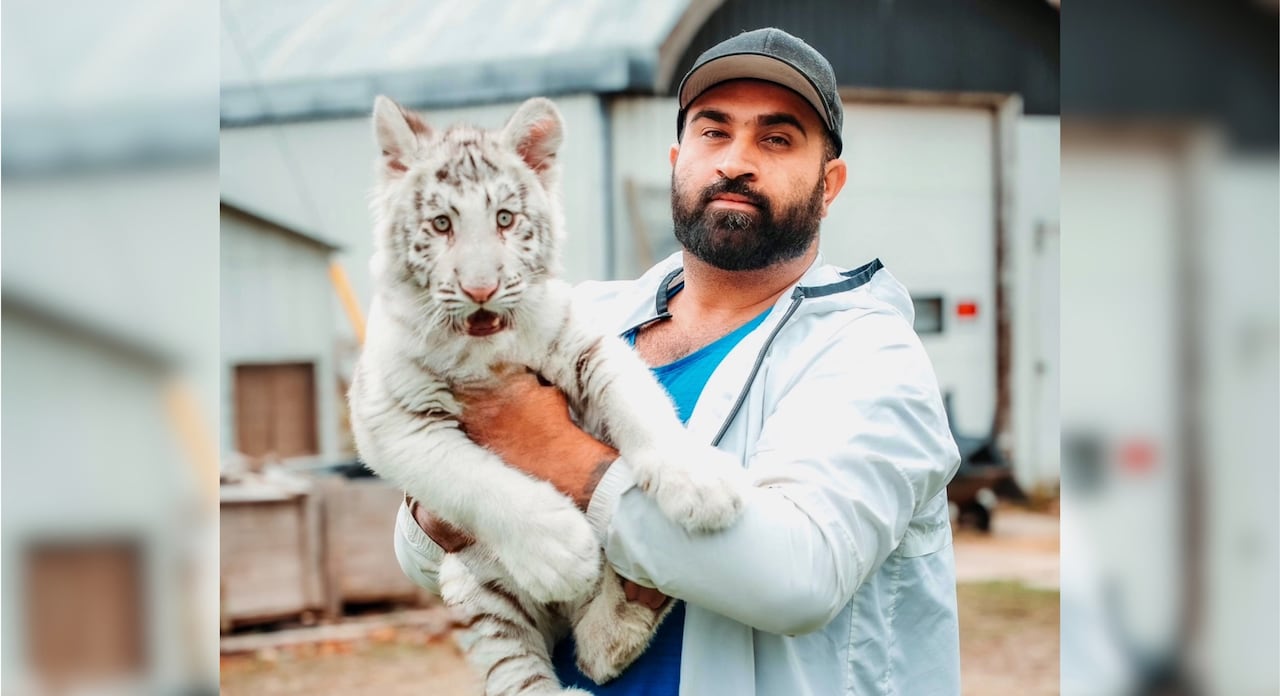
Zohaib Masood is seen with a juvenile tiger he kept at a property in Wainfleet, along with two adult tigers and a hyena. The juvenile tiger and hyena were confiscated by Ontario’s animal welfare services inspector. (Submitted by Zohaib Masood)
When responding to calls about big cats, Tardif makes sure to have an escape plan in place.
“I typically leave my vehicle running with the door ajar, just in case I need to make a quick exit,” he explained.
He admits that his protective vest is not designed for encounters with such dangerous animals.
“I’m not sure how effective this would be against a tiger bite,” he remarked. “I want to return home safely at the end of the day. I have a family, so I do what I must.”
Big cats, missing statistics
Wainfleet’s bylaws mandate that exotic animal owners register their animals with provincial animal welfare authorities. However, obtaining a comprehensive understanding of exotic animal ownership and related incidents across the province through government records is challenging.
While Ontario permits the ownership of dangerous predators, there is no centralized system to keep track of these animals.
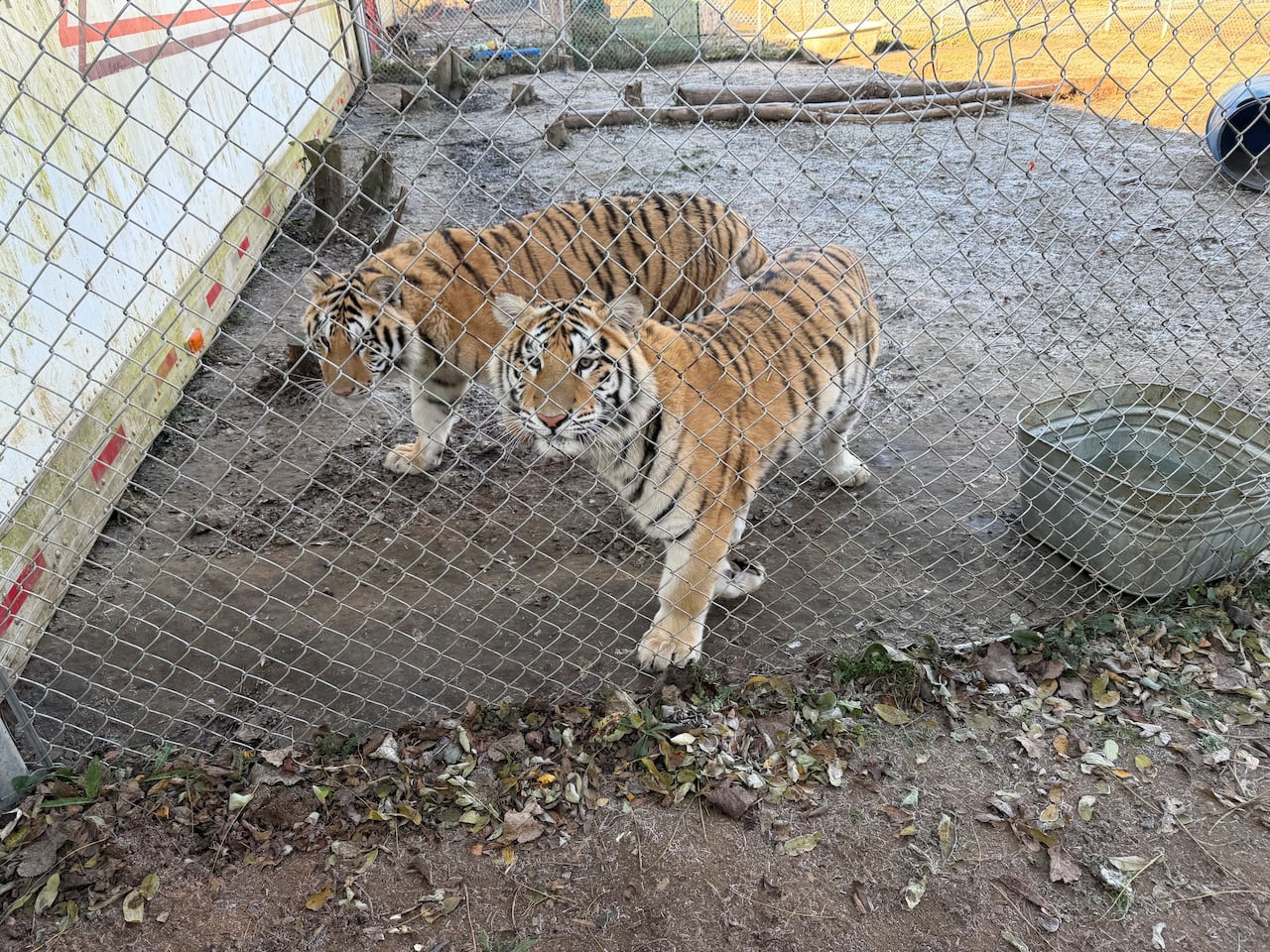
Two privately-owned tigers are seen in an enclosure in Wainfleet, Ont. There are no federal or provincial regulations regarding the ownership of dangerous exotic animals in Ontario, which places the responsibility of monitoring and enforcement on local municipalities. (Mark Tardif/Township of Wainfleet)
Emergency responders may arrive at a property without prior knowledge of the presence of a lion or tiger, and when municipalities compel an owner to relocate, the animals are often moved to a different area.
CBC News requested records from Ontario concerning complaints and seizures related to privately-owned big cats, as well as any statistical reports about these animals from January 2020 to May 2026. The Ministry of the Solicitor General indicated that such records are not stored in a single database and estimated that fulfilling the request would cost $1,050, which equates to roughly 35 hours of search time at Ontario’s standard Freedom of Information rate.
“The records relevant to this request are not kept as a centralized dataset,” the ministry explained in correspondence with CBC News, noting that the information is dispersed across various systems, files, and departments.
The Ministry of the Solicitor General also stated that the OPP lacks “a classification system that tracks incidents involving ‘exotic or dangerous animals.'”
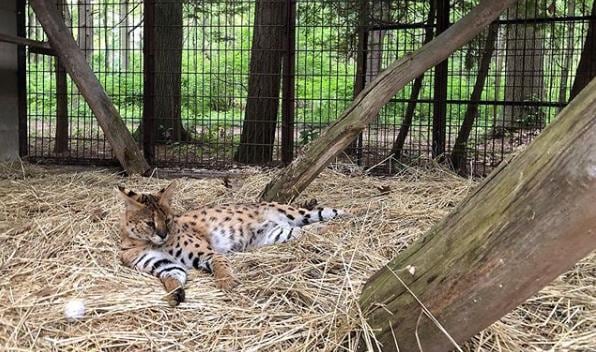
A serval rests on hay in its enclosure at Roaring Cat Retreat in Grand Bend, Ont., as shown in this June 2019 Instagram photo. (Roaring Cat Retreat/Instagram)
An access-to-information inquiry made by CBC News to the RCMP regarding any tracking of big cats in private ownership also yielded no records.
The only federal agency that monitors big cats is Environment Canada and Climate Change Canada.
The agency mentioned in an email that two live tigers were imported into Ontario between 2022 and October 2026. Import applications must specify the intended destination for the animals, but monitoring ownership changes, births, and deaths generally falls under provincial jurisdiction, the department clarified.
‘Significant gap’ in regulations
Once lions and tigers arrive in Canada, Kendra Coulter, a professor at Huron University College and head of the Animal Ethics and Sustainability Leadership program, notes that Ontario lacks a system to track who owns these animals, where they are located, or the number born in the province.
“Saying they fall through the cracks implies there is some kind of system or framework in place surrounding these animals and public safety,” remarked Kendra Coulter, who is also a professor of management and organizational studies at Western University. “This is a significant gap that needs to be addressed,” she asserted.
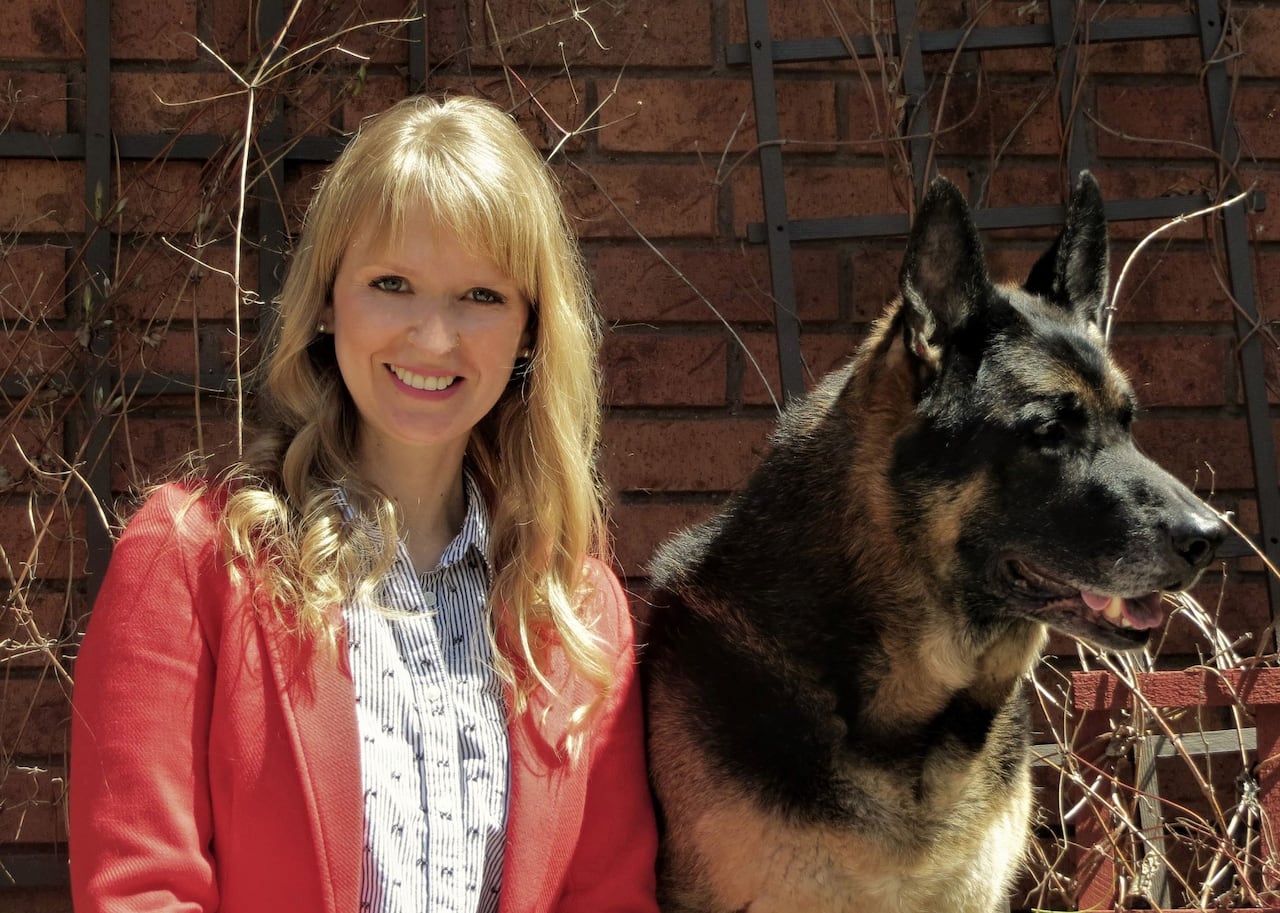
Kendra Coulter is a professor at Huron University College and coordinator of the Animal Ethics and Sustainability Leadership program. (Submitted by Kendra Coulter)
Coulter explains that due to the absence of regulations regarding exotic ownership in Ontario, there are “hidden networks” where individuals knowingly buy, sell, and transfer dangerous animals.
“While we lack concrete evidence, we do have reports” from law enforcement and informal discussions with researchers, she noted. “Law enforcement has indicated to me that some of these transactions occur online through commercial trading platforms, often using coded language.”
CBC has not independently verified that animals are being traded through coded advertisements.
Many exotic animal owners are hesitant to discuss their situations publicly. CBC News reached out to two private owners and Bervie Zoological Park, a roadside zoo located approximately 220 km west of Toronto, all of whom have recently had big cats confiscated by provincial authorities. None of them were willing to comment on the matter on the record.
When these animals are taken, they are often transferred to accredited zoos by the province. Many of these facilities were also reluctant to publicly address the issue. Some representatives contacted by CBC News expressed concerns about potential confrontations with owners wanting to reclaim their animals.
Jungle Cat World Wildlife Park, a roadside zoo in Clarington, declined a request for an interview and tour, but its owner, Peter Klose, agreed to respond to questions via email.
“We believe that zoological facilities and research institutions that work with wildlife should be subject to provincial oversight to ensure high animal welfare standards for all animals in captivity,” he stated when asked about the need for Ontario to implement legislation regarding the ownership of dangerous species like lions and tigers.
One community’s prohibition, another’s challenge
For Erin Ryan, wildlife campaign manager at the animal welfare organization World Animal Protection, the more pressing question is how these animals end up in private ownership initially.
“In the absence of a zoo licensing system or any permitting framework, there are no requirements to demonstrate that individuals possess the expertise, facilities, or resources to safely care for the animals or the public when these animals are transferred,” she explained.
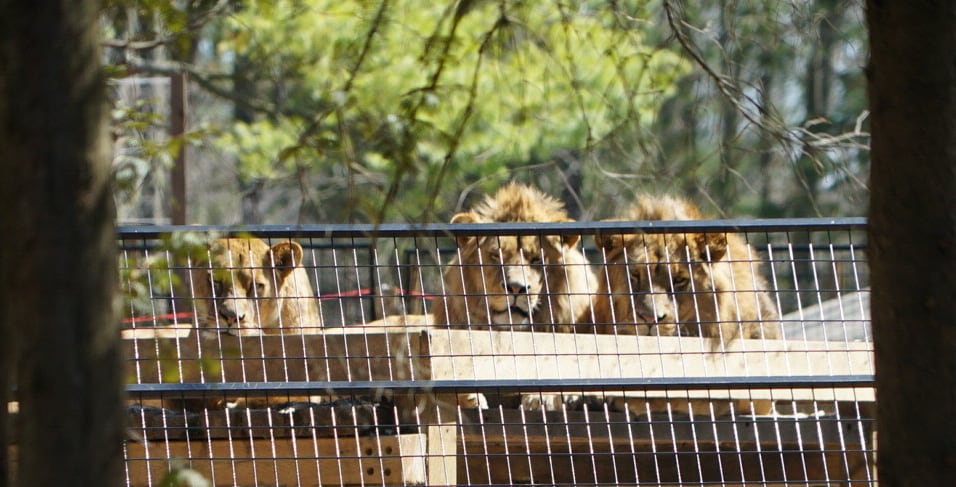
Big cats watch from behind a fence at Roaring Cat Retreat in Grand Bend, Ont., in 2019. (Colin Butler/CBC)
In 2018, animals from Ringtail Ranch relocated from Wainfleet in the Niagara Region. In 2019, the owner reemerged in Grand Bend in southwestern Ontario. Following a dispute with local officials there, the owner moved to Maynooth in southeastern Ontario the next year.
In 2022, after four of the ranch’s lions killed and consumed a tiger, the owners were permitted to choose the new locations for the surviving animals.
Brent Ross, a spokesperson for the Ministry of the Solicitor General, stated that the animals “were rehomed in suitable environments to ensure their welfare. The location of the animals remains confidential for similar reasons.”
“They just pack up and relocate to another area where there are no bylaws,” Ryan noted. “Local regulations can compel an owner to move but do not guarantee the next location is adequate for the animals.”
For Ryan, the concern lies in what occurs when the animals arrive at their new destination.
“Local regulations can compel an owner to move, but they do not ensure that the next property can accommodate the animals,” she emphasized.
Coulter and her research team at Huron University College analyzed the bylaws of all 444 municipalities in Ontario in 2020. At that time, half of them did not mention ownership of non-native wild animals.
“You can move just 15 minutes west into the next county and face no restrictions,” she explained. “You can have a tiger in your backyard.”
In essence, municipalities may enforce regulations to remove dangerous animals, but in the absence of provincial laws outlining where these animals can reside, enforcing a bylaw in one locality often shifts the burden to another, creating a fragmented regulatory landscape.
Proposed regulations, yet no advancement
A proposal to establish a clear set of regulations for Ontario was made in 2025 through Bill 35, a Liberal private member’s bill that called for zoo licenses, annual inspections, and inventories documenting births, deaths, and transfers of non-native animals.
If the proposed legislation were enacted, current owners could retain their animals but would need to register them and undergo yearly inspections. However, the bill appears to have stalled. According to the Ontario legislature website, Bill 35 has not progressed beyond its initial reading since May 29, 2025.
CBC News contacted Kanata-Carleton Liberal MPP Karen McCrimmon, who sponsored the bill. Her office indicated that it remains “in limbo” and they are uncertain whether it will advance in the current legislative session.
Back in Wainfleet, Tardif refrains from indicating whether the province needs more definitive regulations regarding the private ownership of exotic animals.
“I don’t have control over actions taken by the federal or provincial government,” he stated. “It complicates everyone’s responsibilities, but these are the tools available to us and the rules we must adhere to.”