

More than a month after Neskantaga First Nations announced a state of emergency due to a sewage spill at its nursing station, a fire at its temporary health-care center has caused further distress in the community. The sewage incident occurred shortly after over 140 community members returned from Toronto post a wildfire evacuation.
The remote Ojibway community, located around 440 kilometers northeast of Thunder Bay, Ontario, is home to fewer than 400 people, with approximately 250 vulnerable individuals currently in Toronto due to the sewage spill. Indigenous Services Canada officials, including the department’s Ontario regional director general, visited the First Nation to evaluate the situation.
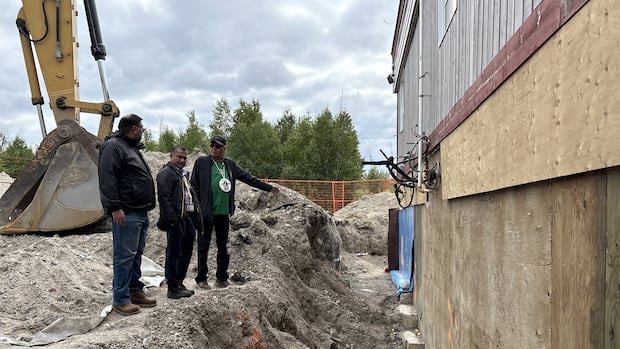
Neskantaga Chief Gary Quisses, in a statement on Friday, highlighted deficiencies in past remediation work at the nursing station, such as an open gap in the exterior wall and black mold resulting from sewage flooding. The Indigenous Services Minister has been in communication with Quisses regarding the concerns.
Efforts are underway to identify interim health service solutions while the main facility assessment is ongoing. Discussions are ongoing to tailor support to meet the community’s evolving needs, with a focus on practical assistance in various areas.
Amidst the challenges, Neskantaga’s Child and Family Resources Centre is currently serving as a temporary nursing station following the sewage spill. The community is exploring options for another temporary health clinic, possibly utilizing existing facilities or modular buildings in the area.
The community is advocating for a new functional clinic to be built, emphasizing the need for a swift transition from the feasibility study to the pre-design stage. Discussions are ongoing to address both immediate response needs and long-term health infrastructure priorities, including the construction of a new health facility.
Neskantaga, part of the Matawa First Nations Management tribal council, has called for a working group to be established to address the emergency situation and the need for a new nursing station. The Matawa chiefs have urged government responses to address critical community infrastructure issues.
Quisses expressed concerns about the impact of the evacuation on community events and the upcoming school year, particularly on displaced students. Efforts are being made to support evacuees facing social challenges and feelings of isolation as the situation unfolds.

