
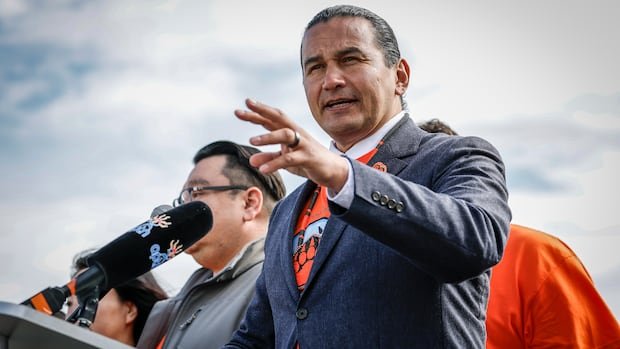
Manitoba Premier Wab Kinew opposes the idea of making residential school denialism illegal, as suggested by federal Manitoba NDPer Leah Gazan, insisting that it is abhorrent but should not be a criminal offense. Kinew stressed the importance of educating people and combating misinformation on this issue instead of resorting to criminalization.
Gazan’s private member’s bill, Bill C-254, aimed at amending the Criminal Code to address promoting hatred against Indigenous people, failed to progress during the 2025 election. She emphasized the need to protect survivors and their families from hate, underscoring the devastating impact of the residential school system on Indigenous cultures and communities.
Reintroduced in October 2025, the bill seeks to prohibit any public endorsement, denial, justification, or minimization of the Indian residential school system in Canada beyond private conversations.
-
Bill proposing to criminalize residential school denialism
-
SCO criticizes column questioning residential school atrocities
All bills must undergo three readings, including committee reviews and debates, before receiving royal assent to become law.
For over 150 years, starting in the 1830s until 1997, Indigenous children were forcibly taken to government-funded residential schools, operated mainly by Christian organizations, with the aim of assimilating them into Euro-Canadian culture. These schools, attended by an estimated 150,000 children across Canada, have been linked to over 4,000 documented deaths, as reported by the National Centre for Truth and Reconciliation.
On the National Day for Truth and Reconciliation on Sept. 30, Kinew announced the purchase of a former Brandon Residential School property in partnership with the City of Brandon. The site includes a former school cemetery used from 1895 to 1912, which still contains the remains of children.
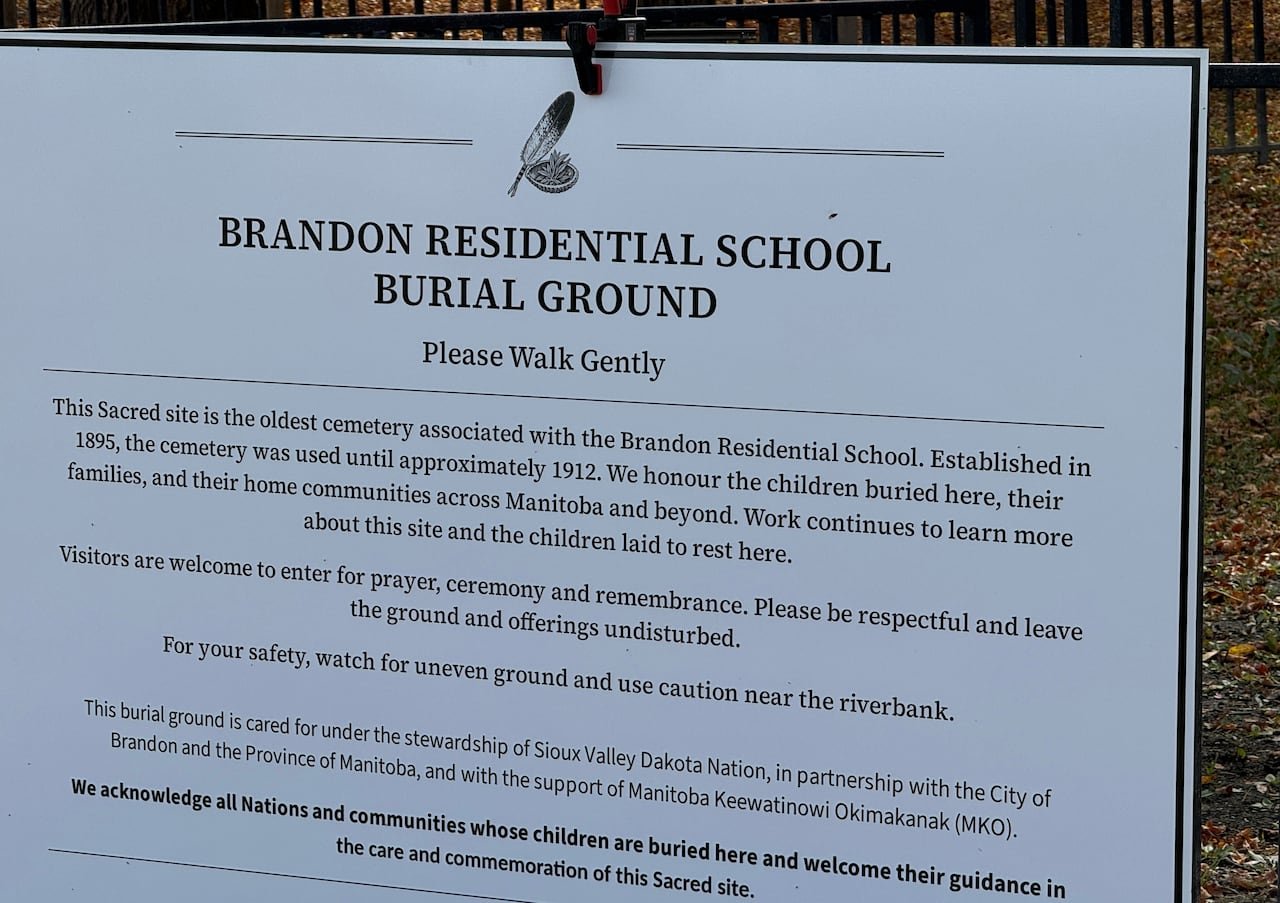
A sign marks the Brandon Residential School cemetery, formerly a park and campground. (Jaison Empson/CBC)
Kinew emphasized the importance of events like the memorial dedication to educate the public about the history of residential schools, ensuring that this dark chapter remains in collective memory.
Sioux Valley Dakota Nation, the landowner of the former school site, is collaborating with researchers to identify over 50 buried children. Rev. Stan McKay, whose family has a history with the Brandon school, highlighted the significance of the cemetery purchase in the path to reconciliation.</

