

Israel and Lebanon have agreed to renew a fragile ceasefire, with Hezbollah members prohibited from certain security zones to prevent further missile attacks. The pact hinges on a complete halt to aggression by Iran’s proxy group in Lebanon, enforced by the threat of retaliatory strikes on Beirut by Israel. Israeli Defense Minister Israel Katz emphasized that any breach by Hezbollah would lead to continued attacks, potentially targeting the group in south Beirut.
The agreement promises security to the residents of northern Israel by mandating the disarmament of Hezbollah, the expulsion of its members south of the Litani River, the ongoing presence of the IDF in the security area, and granting Israel freedom of action. However, the far-right Israeli National Security Minister Itamar Ben-Gvir criticized the deal as a grave error, warning that it could bolster Hezbollah’s strength.
Brokered and announced by the US State Department, the agreement aims to ease tensions in Lebanon to meet Tehran’s demands for a resolution to the conflict with Iran. Tehran has stressed the inclusion of Lebanon in any peace negotiations involving the US and the reopening of the Strait of Hormuz. Recent Israeli airstrikes in southern Lebanon and retaliatory Hezbollah rocket attacks have escalated the situation.
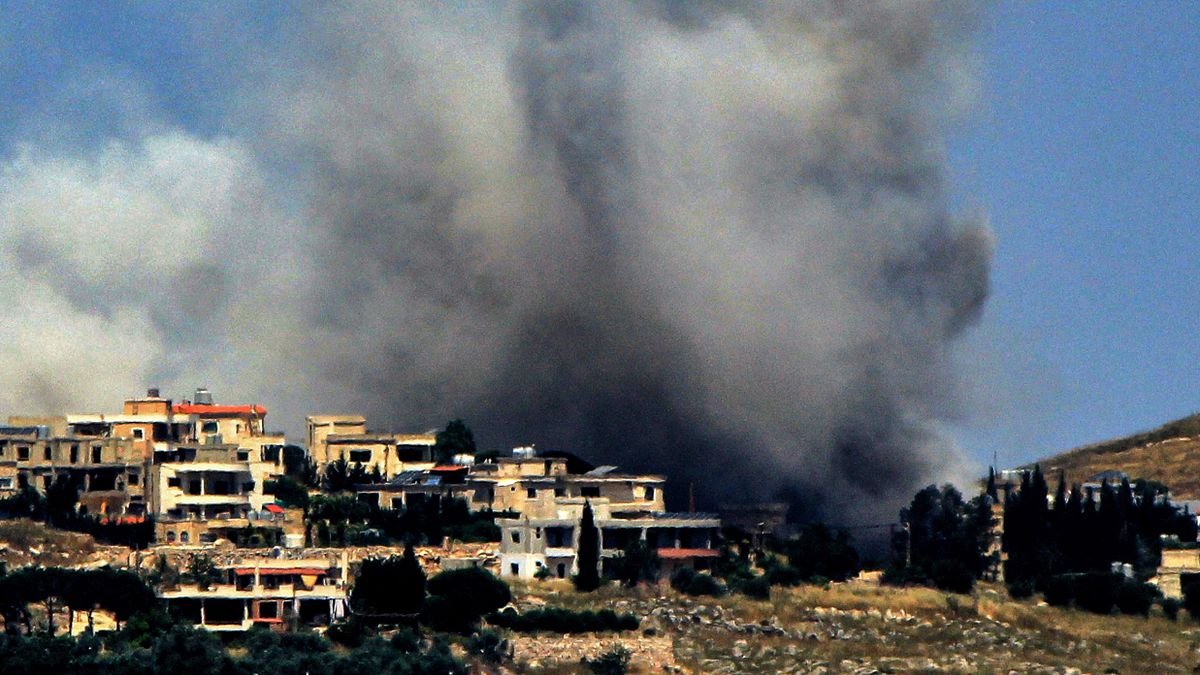
Reports suggest that Israeli airstrikes have persisted in southern Lebanon, causing casualties. The accord between Israel and Lebanon mandates the removal of all Hezbollah operatives from the area between Israel’s border and the Litani River, creating a buffer zone to deter militant missile launches. The US will assist in establishing zones where the Lebanese Armed Forces will assume military control, excluding Hezbollah.
Hezbollah, a Shia militia also functioning as a political party, possesses a military force surpassing Lebanon’s army but is labeled a terrorist organization by Israel, the US, and the UK. The agreement outlines further negotiations between Lebanon and Israel scheduled for June 22.
The conflict involving the US, Israel, and Iran drew Lebanon into the fray on March 2 when Hezbollah attacked Israel in retaliation for the killing of Iran’s Supreme Leader Ayatollah Ali Khamenei. As tensions mounted, Israel intensified its strikes on Hezbollah amid prospects of a truce between the US and Iran. Casualties on both sides have mounted, with thousands dead in Lebanon and numerous displaced persons.
In a separate conflict, Gaza saw nine Palestinians killed in overnight strikes, adding to the toll from a prolonged conflict between Israel and Hamas. Israeli forces have conducted airstrikes and fired on Palestinians near military zones, with casualties on both sides since a ceasefire agreement attempted to halt hostilities. Israel’s offensive in Gaza was in response to Hamas’ 2023 attack that resulted in significant casualties and hostages.
For more news updates, consider selecting Daily Mirror as a ‘Preferred Source’ on Google News.

