
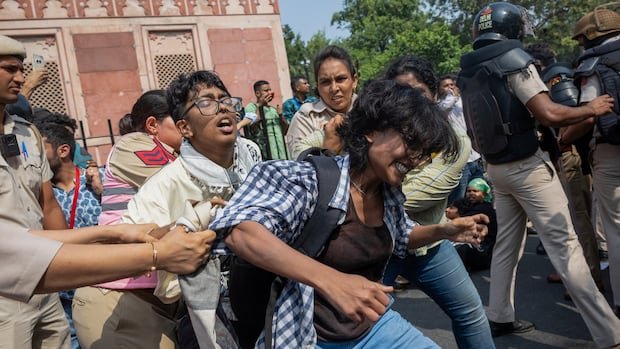
Indian authorities implemented a significant security crackdown in New Delhi on Saturday, detaining numerous protesters as part of the youth-led “Cockroach” movement’s efforts to escalate a nationwide protest against a controversial voter list revision. This revision has sparked discontent towards Prime Minister Narendra Modi’s Hindu nationalist government and the election authorities.
Police took preemptive action to disperse the demonstrators en route to Jantar Mantar, the designated protest location in central New Delhi, resulting in the detention of many individuals. Key leaders of the Cockroach Janta Party (CJP), opposition lawmakers, and student activists were among those detained before the protest could commence, effectively hampering the demonstration.
The security measures extended beyond the protest area, with police conducting searches at checkpoints and barricading Jantar Mantar. Additionally, restrictions on mobile internet access and movement within the city further hindered protesters.
Authorities stated that permission for the protest was denied due to a late submission of the request. Sambit Patra, a spokesperson for Modi’s party, dismissed the protesters as “anarchic elements,” declaring their demonstration unsuccessful.
The extensive crackdown highlighted the government’s resolve to disrupt the growing protest movement, which has mobilized a significant number of young people and garnered opposition backing, leading to increased scrutiny of Modi. This comes following previous protests related to exam paper leaks that led to the resignation of Modi’s education minister.
Security was tightened around the protest site, with movement leaders Abhijeet Dipke, Saurav Das, and Ashutosh Ranka being detained upon arrival in Delhi, further impeding the protest’s leadership. Despite warnings and restrictions, some protesters managed to breach police cordons and express their dissent before being apprehended.
The demonstrations focus on the Election Commission’s Special Intensive Revision, criticized by the opposition for disenfranchising millions of voters. Protesters demand the resignation of the chief election commissioner and a halt to the revision that has removed over 130 million names from voter lists. The government denies allegations of voter manipulation, attributing the revision to removing duplicate and ineligible entries.
The dispute has become a rallying point for opposition parties challenging Modi’s Bharatiya Janata Party, with accusations of bias in the voter list revision process. The opposition, including Rahul Gandhi, has accused the commission of favoring Modi’s party, leading to further tensions and arrests of opposition figures.
For the Cockroach Janta Party movement, the voter list controversy serves as an opportunity to expand its activism, building on previous protests against exam paper leaks that resulted in a minister’s resignation. The movement poses a challenge to Modi midway through his third term, with upcoming state elections in BJP-ruled states testing the party’s strength before national elections in 2029.

