
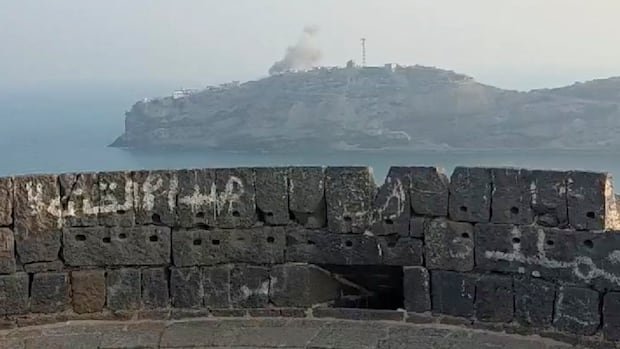
Yemen’s Houthis launched missile strikes at the presidential palace complex in Aden, resulting in the deaths of two guards, while the Saudi-led coalition reported numerous attacks on Saudi infrastructure in the escalating conflict.
This attack marks the first direct confrontation between the Iran-aligned Houthis and Saudi Arabia at Aden’s al-Maashiq palace, the headquarters of Yemen’s internationally recognized government backed by Saudi Arabia. The clash adds a new dimension to the broader regional conflict that originated with U.S. and Israeli military actions against Iran in February.
Yemen’s Information Minister, Moammar al-Eryani, confirmed the safety of the government’s prime minister and cabinet members after the assault. Witnesses reported hearing loud explosions near the palace, with the Yemeni cabinet disclosing that the attack involved a combination of missiles and drones, resulting in the loss of two guards.
Houthi spokesperson Yahya Saree claimed responsibility for targeting what he described as the Saudi military operations headquarters in Aden, in line with the group’s strategy of striking “Saudi reinforcements wherever they are positioned.” The Houthi-run news agency SABA alleged that the headquarters housed Saudi officers and weapon stockpiles, although these claims could not be independently verified by Reuters.
The recent surge in hostilities between the Houthis and Saudi-backed forces in Yemen has raised concerns among aid agencies about the deteriorating humanitarian situation. Government forces have recently launched an offensive to reclaim territories controlled by the Houthis, making gains near the Bab el-Mandeb Strait, a crucial global maritime route.
Residents of Taiz, located northwest of Aden, are facing increased bombardment and shortages as the Houthis tighten their grip on surrounding areas. Taiz, Yemen’s third-largest city, has become a focal point in the conflict that erupted in 2014 when the Houthis captured the capital Sanaa, leading to a protracted struggle with Saudi-led forces.
As Saudi Arabia supports the Yemeni government, the Houthis have been targeting Saudi airports, ports, and oil facilities with ballistic missiles and drones, transforming Saudi Arabia into a critical battleground in the wider conflict and jeopardizing its economic development plans.
The Saudi-led coalition revealed that the Houthis have made multiple attempts to attack numerous sites in Saudi Arabia, underscoring the threats to Saudi civilian infrastructure. International condemnation followed the attacks on Saudi airports and aviation infrastructure, with Global Affairs Canada advising against travel to Saudi Arabia.
Coalition spokesperson Turki al-Maliki reported that the Houthis had carried out multiple attacks on King Khalid International Airport in Riyadh, resulting in casualties. The coalition also cited Houthi assaults on Abha airport near the Yemeni border, causing fatalities and injuries.
Al-Maliki accused regional actors, including Iran, of providing advanced military technology to the Houthis, enabling them to acquire ballistic missiles, drones, and fast boats laden with explosives. In response, the coalition has targeted weapons storage facilities and launch sites in Yemen’s mountainous regions, urging the Houthis to halt operations endangering civilians and civilian infrastructure.
The Houthis responded by cautioning airlines about the safety of Saudi airspace and airports, exempting the holy cities of Mecca and Medina from their warning. Meanwhile, Saudi Arabia’s civil defense authority issued an alert about a potential threat in Najran province, which was later deemed to have passed.
Subsequently, the Saudi-led coalition intercepted and destroyed a drone in Khamis Mushait, along with another launched towards the southern region of Saudi Arabia.

