Talks this week, supported by the UN, aimed at regulating AI in military applications concluded on Saturday. While nations agreed to continue discussions, they failed to reach a consensus on establishing definitive regulations to control lethal autonomous weapons.
Advocates for regulation, including UN Secretary General António Guterres, have urged for a legally binding treaty to be established promptly concerning AI weaponry like drones, which can identify and eliminate targets without human intervention.
The negotiations took place from Monday to Friday during a Convention on Certain Conventional Weapons meeting in Geneva, with the participation of over 100 countries that are signatories to the convention, including Canada.
Although most nations showed support for progressing towards a treaty, some military powers, notably the U.S. and Russia, were hesitant to commit to binding regulations that would restrict their development of advanced weaponry. This led to a diluted agreement to “elaborate” on a potential accord regarding lethal autonomous weapons systems by the year 2028.
Izumi Nakamitsu, the UN high representative for disarmament affairs, praised the outcome as a “significant achievement,” yet recognized the contrasting views, highlighting Guterres’s aspirations for a legally binding agreement within this year.
Nevertheless, some advocacy groups criticized the lack of stronger language at a time when AI is increasingly influencing lethal attacks.
“For the 14th year, states have agreed that merely discussing the issue is adequate, while these weapons facilitate atrocities,” stated Max Tegmark, a machine learning expert from the Massachusetts Institute of Technology and founder of the Future of Life Institute.
Superpowers resist binding rules
Branka Marijan, a senior fellow at the Centre for International Governance Innovation and a researcher with the anti-war organization Project Ploughshares, remarked that while the outcome is disappointing, it was anticipated.
Marijan pointed out that military superpowers such as the U.S. and Russia have shown reluctance towards legally binding regulations.
“There is a significant issue regarding political will. The major military powers lack the political determination to support binding agreements and enforceable laws,” she commented.
The use of AI in conflicts is becoming more widespread as nations seek advantages in warfare.
Both Russia and Ukraine are employing AI to locate targets and strategize attacks as the war approaches its fifth year. Reports indicate that autonomous drones from Russia have resulted in civilian fatalities, while Ukraine has also reportedly trialed similar technologies.
The U.S. has made a significant effort to enhance its AI deployment in military operations and is currently testing advanced self-flying drones.
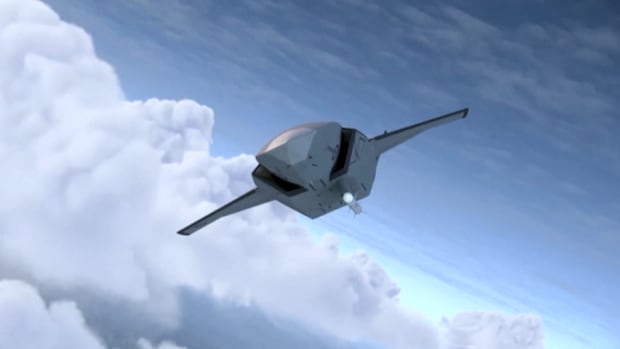
Governments are spending billions on the autonomous arms race — should Canada join in? For The National, CBC’s Jennifer Yoon examines the future of AI-powered military weapons, what it means for international humanitarian law and where Canada fits in.
The urgency for regulation has intensified as the global community witnesses a “hugely perilous shift” towards the creation and implementation of more advanced autonomous weapon systems without appropriate safeguards, according to Marijan.
“While extreme scenarios exist, there are immediate risks and concerns when considering that each nation could currently deploy these systems with no substantial restraints,” she warned.
CBC News contacted Global Affairs Canada and the Department of National Defence for their input.
-
The age of AI warfare has dawned. Is Canada ready?
-
Military commander vows fast action on AI and robots, sees ‘untapped potential’ for Canada
Earlier this month, the Department of National Defence informed CBC News that the Canadian Armed Forces endorses the advancement of autonomous capabilities, provided they are “managed within a responsible human command and control structure and commit to ensuring the reliable and lawful use of such weapon systems.”
Canada was among the nations that endorsed a declaration regarding the governance of AI in military operations during a military AI summit held in Spain in February.
In 2025, Canada also supported a UN resolution urging nations to establish a foundation for potential negotiations on a treaty regulating lethal autonomous weapons systems.
Nakamitsu from the UN urged nations to start working towards an agreement as soon as Monday and “begin contemplating how to create the strongest possible instrument to prohibit and regulate lethal autonomous weapon systems.”