

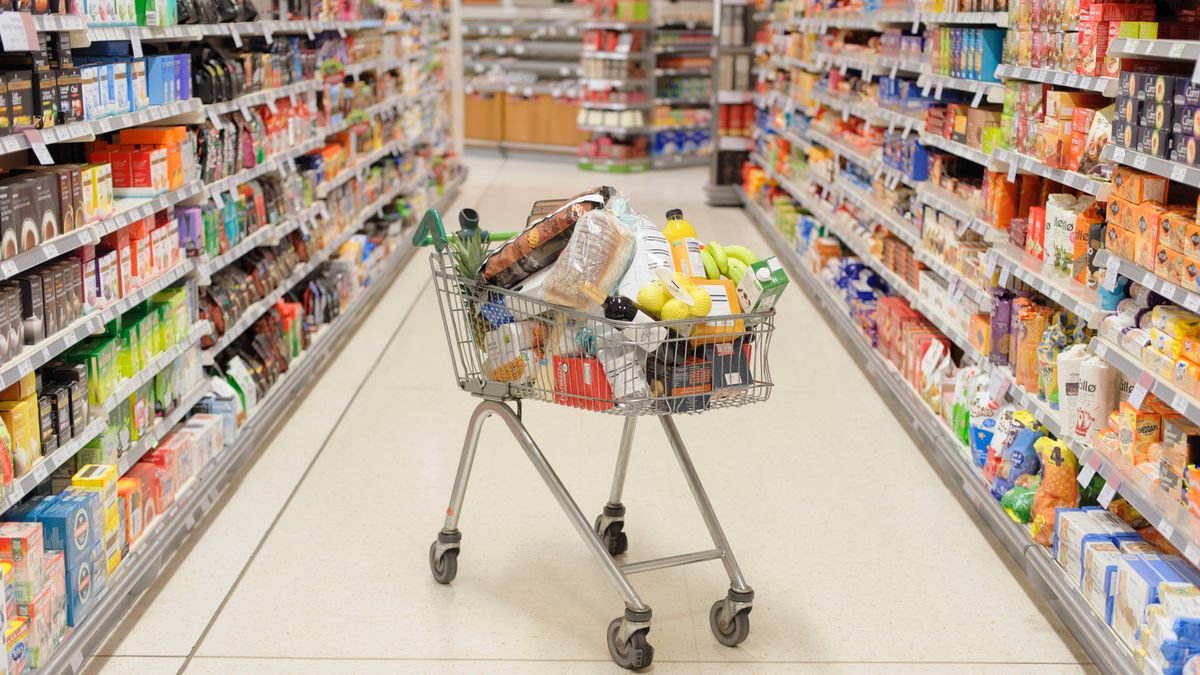
Shoppers are being cautioned that food prices may continue to rise in the upcoming months despite a decrease in inflation. Food inflation dropped to 2.2% in May, marking the lowest rate since December 2024, down from the 3% recorded in April.
The impact of the Middle East conflict is still affecting the food industry, according to Karen Betts, the chief executive of the Food and Drink Federation. The closure of the Strait of Hormuz has led to increased energy and fertilizer expenses, making production and distribution more costly.
Betts mentioned, “Although food inflation eased in May, the closure of the Strait of Hormuz has not yet been fully reflected in consumer prices. It typically takes several months for the increased costs incurred by farmers, processors, and manufacturers to translate into higher prices at retail outlets.”
Data from the Office for National Statistics (ONS) revealed that prices rose notably for beef and veal (9.4%), offal (9.2%), preserved fruit (9.0%), and confectionery products (8.8%). Conversely, prices decreased for various items such as flours (-6.1%), olive oil (-4.2%), and jams and marmalades (-3.0%).
Industry experts had previously warned that food price hikes may extend into 2028, although the worst-case scenario might be avoided. The Institute of Grocery Distribution (IGD) forecasts an average food inflation rate of 3.2% to 4.2% next year and 2.3% to 3.3% in the first half of 2028.
Households with children are estimated to require an additional £203 for food and drink this year and £207 for next year. In May, the Consumer Prices Index (CPI) remained stable at 2.8%, lower than economists’ expectations of a 3% increase.
Grant Fitzner, the chief economist at ONS, explained, “Inflation remained steady in May, with various price movements balancing each other out. Transport costs rose, driven by airfares, vehicle taxes, and petrol prices, while lower food prices helped offset these increases.”
Overall, the ONS data indicates a complex economic landscape where food prices are just one element contributing to the broader inflationary picture.

