
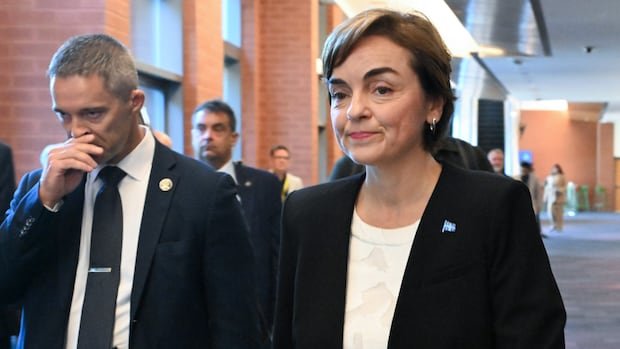
Christine Fréchette, the leader of Coalition Avenir Québec, pointed fingers at members of her own party for attempting to involve journalists in investigating foreign interference in the election process. She sought to distance herself from a lingering controversy that has followed her during the election campaign.
Fréchette had to backtrack on her previous remarks from Friday where she raised concerns about potential American involvement to aid the Parti Québécois in winning the election as a way to disrupt Canada’s unity.
Initially urging for an urgent meeting with Prime Minister Mark Carney to address her worries on Friday, she later confirmed in a statement by the end of the day that there was no proof of foreign interference in the ongoing provincial election.
However, Fréchette had to revisit the issue on Monday after a report by Radio-Canada exposed that someone within the Coalition Avenir Québec had briefed journalists on foreign interference before informing her or the relevant federal authorities.
“I believe it was imprudent,” Fréchette commented in Mont-Tremblant. “Given the sensitivity of the matter, it should have been cleared by me before discussing it with journalists.”
Fréchette, along with Domestic Security Minister Ian Lafrenière, mentioned that the party had internally addressed the leak.
“No one orchestrated that initiative,” Lafrenière stated on Radio-Canada. “We took measures to prevent the individual from taking such actions again.”
-
Christine Fréchette under scrutiny over CAQ performance in Quebec debate
-
Political opponents criticize Fréchette’s allegations of U.S. interference as fear tactics
The accusations by CAQ focused on certain writings from a U.S.-based think tank, the Defense Analyses and Research Corporation, advocating for American intervention to sow discord in Canada and disrupt the country’s unity.
Fréchette mentioned that the staff member who had communicated with journalists regarding the writings was still part of her team.
Additionally, on Friday, Fréchette confirmed that her party had engaged with the Canadian Security Intelligence Service in the past week to discuss the potential interference.
In an email statement to The Canadian Press on Friday, CSIS disclosed that they had briefed the political parties in the province on foreign interference risks back in June.
“This approach aligns with our current practices of providing briefings to any political party in the country when elections are called at the federal or provincial level, aimed at safeguarding our democratic processes and enhancing resilience against threats,” stated CSIS spokesperson Eric Balsam.

