


With the upcoming imposition of additional tariffs by the Trump administration in January, many Canadians are pondering what strategies could be employed to influence a change in direction.
This inquiry implies that there exist tangible actions that could sway the opinions of U.S. President Donald Trump — that by retaliating strongly or showcasing a willingness to endure hardships, policy adjustments could be achieved.
Christopher Ragan, the inaugural director of McGill University’s Max Bell School of Public Policy and former chair of Canada’s Ecofiscal Commission, expressed uncertainty by stating: “Canada is engaging in negotiations with a party that seems capricious and volatile, so it remains unclear what tactics will be effective.”
Don Drummond, former chief economist at TD Bank, suggested that if Canadians are prepared to bear the repercussions, there are numerous methods to push back against the U.S.
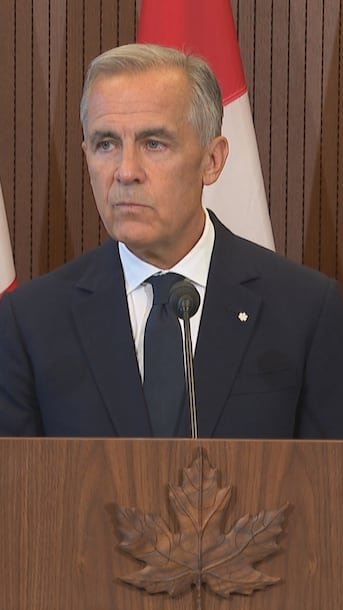
Prime Minister Mark Carney denounced U.S. President Donald Trump’s new 50 percent tariffs as a ‘misjudgment,’ emphasizing that Canadians are united and in control of their fate.
“One could target their identified priorities first,” Drummond suggested. “They have made it unequivocally clear that the primary items they desire from Canada are oil, and potentially electricity for a period.”
“Historically, we have imposed export taxes on oil and natural gas, and we could reintroduce these. Additionally, quotas could be implemented,” he added.
Canada wields significant influence concerning energy and fertilizer, with Canadian commodities making up a substantial portion of U.S. imports, as evidenced by data from 2025.
Diverse Options Beyond Tariffs
Although Canada is still in the process of fully exploiting its critical mineral reserves, Drummond proposed that the U.S. could be notified that it will not receive preferential access once these reserves become operational.
“We could also restrict American entry into Canada,” Drummond suggested. “In extreme scenarios, visa requirements could be imposed, and access could be limited.”
Moreover, Canada could opt not to purchase F-35 fighter jets from the U.S. and instead consider procuring the Gripen from Sweden, he recommended.
Canadian financial entities, governments, pension funds, and others currently hold approximately $459.6 billion US in U.S. treasury bonds.
“Given the current U.S. struggle to lower long-term bond yields, announcing a divestment of these assets, or at least halting further acquisitions, could provoke a reaction,” Drummond highlighted.

