
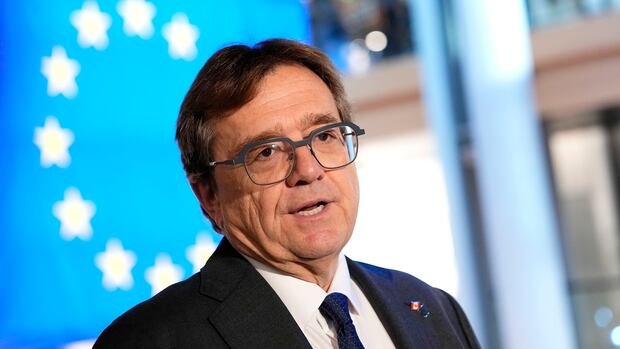
In his pursuit of forging a distinct partnership with the European Union, Prime Minister Mark Carney is steering away from the idea of direct financial contributions to the EU budget, as confirmed by Canada’s incoming EU ambassador, Jonathan Wilkinson. Wilkinson emphasized a selective approach, clarifying that the collaboration does not entail full EU membership but may involve funding for specific programs such as the EU’s Security Action for Europe (SAFE) initiative.
Canada’s participation in the SAFE program, which extends loans to member states for defense initiatives, highlights the potential for cooperation beyond financial commitments. Wilkinson cited opportunities for joint efforts, including enhancing Canada’s critical minerals trade by attracting European investments in the sector and collaborating on advancements in AI and digital technologies.
Carney’s recent address to the European Parliament unveiled key aspects of his vision for closer ties between Canada and the EU, encompassing seamless digital trade, potential membership in programs like Erasmus+ for education support and the next generation of Horizon for research funding. The plan also includes mutual cooperation on computing, broadband infrastructure, AI safety protocols, and exploring an integrated financial services market.
The specifics of the alliance, including potential trade-offs and the approval process by respective parliaments, remain uncertain. Wilkinson expressed caution in premature conclusions, addressing concerns raised by opposition parties regarding possible changes to Canada’s migration policies. The focus is on maintaining Canada’s sovereignty while deepening ties with the EU in strategic areas identified by the Prime Minister.
European officials like Thomas Byrne from Ireland and Arash Saeidi from France acknowledge the common values shared with Canada, emphasizing mutual benefits and shared interests rather than imposing obligations on either party. However, concerns arise from U.S. President Donald Trump’s skepticism towards closer Canada-EU relations, with warnings of potential tariffs as a response. Despite external challenges, both sides are determined to pursue strengthened ties in various fields like diplomacy, culture, and academic research.
While some European voices call for greater strategic independence from the U.S., Canada remains committed to resilience and sovereignty in pursuing partnerships. Carney stressed that Canada seeks collaboration based on shared values, not dominance, to safeguard its markets, sovereignty, and democratic principles.
The path forward for the proposed alliance between Canada and the EU remains dynamic, balancing geopolitical considerations and shared aspirations for enhanced cooperation.

