

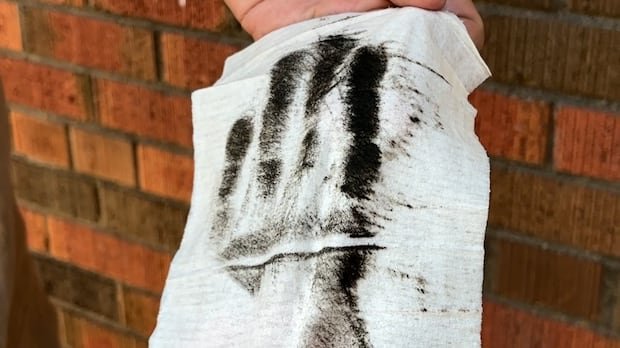
Emissions originating from Birla Carbon, a manufacturing company, have been identified as a primary contributor to the soot that descended on Hamilton neighborhoods in the past month, as reported by Ontario’s Ministry of the Environment, Conservation and Parks (MECP).
The issue of black dust settling over Hamilton communities has been a longstanding concern spanning decades, particularly in proximity to the eastern industrial zone. However, residents and local officials noticed an unusually heavy soot fallout in early July, affecting areas not typically impacted by such occurrences.
The severity of the sooty fallout, which coated residences and affected pets and children, prompted numerous residents to reach out to elected leaders seeking a resolution to the problem.
Ministry spokesperson Lindsay Davidson informed CBC Hamilton on Tuesday evening that Birla has been referred for a formal investigation by the ministry’s environmental investigations and enforcement branch for potential violations of Ontario’s environmental regulations.
Birla Carbon stated that it is fully cooperating with the ministry’s inquiries. When questioned about the cause of the emissions and their nature, spokesperson Roysten Dmello did not provide specific answers, mentioning that the company had not received any communication or report from MECP regarding the findings.
Birla Carbon operates its sole Canadian factory on Parkdale Avenue N., producing carbon black utilized in various manufacturing processes involving rubber and plastic across 14 countries.
According to Davidson, the government shared its analysis and sampling results with Hamilton Public Health. The ministry intends to mandate Birla Carbon to implement all necessary measures to prevent similar incidents in the future.
Health officials are currently evaluating the ministry’s findings in collaboration with toxicology experts to assess potential health implications associated with the soot exposure.
Councillor Tom Jackson disclosed that he received complaints about soot from approximately 45 residents in Ward 6, urging Birla Carbon’s leadership to engage with affected residents directly. He emphasized the importance of holding companies accountable for environmental impact and suggested imposing significant fines, with the funds potentially benefiting affected residents.
The Ministry’s disclosure coincided with a McMaster University study reported by CBC Hamilton, revealing the presence of toxic substances consistent with coal combustion in the soot sampled from homes in Hamilton. The study indicated higher levels of dust and polycyclic aromatic hydrocarbons (PAHs) near the industrial area in northeast Hamilton.
The research team, led by Sarah Styler and Grace Yao, underscored the significance of coal combustion in producing the identified PAHs and expressed the need for further monitoring and analysis to pinpoint specific industrial sources contributing to the contamination.