

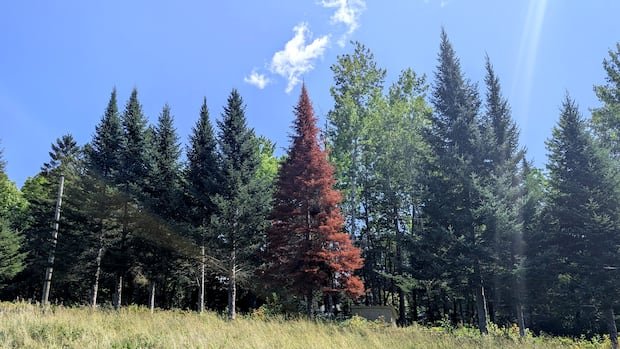
Balsam fir trees in New Brunswick are exhibiting a concerning phenomenon, as they are turning red and perishing following last year’s unprecedented drought. This situation has prompted worries about the sustainability of the provincial tree. Prof. Anthony Taylor, a forestry researcher at the University of New Brunswick, has witnessed firsthand the distressing effects on woodlot owners as the lush evergreen trees, often sought after for Christmas decorations, progressively transition to a red, desiccated state before succumbing.
According to Taylor, the observed pattern aligns with previous instances of balsam fir deterioration following hot, arid summers. He emphasized that warm, dry conditions, such as the recent drought, detrimentally affect the growth capacity of balsam fir trees. Having studied climate change’s impact on New Brunswick’s forests extensively, Taylor highlighted similar die-offs of balsam firs in the aftermath of exceptionally sweltering, dry summers in 1986 and 2018.
When faced with drought conditions, the trees prematurely halt the photosynthesis process, hindering their growth potential. Taylor explained that this interruption impedes the production of essential energy stores necessary for vital metabolic and defense processes. Consequently, the trees become disadvantaged, making them more susceptible to die-off if already stressed by factors like insects or pathogens.
The shallow root system of balsam firs compounds the challenge of accessing water during dry periods. Peter McKeil, a woodlot owner, noticed the initial signs of damage on his property in June, with the trees progressively turning red from the lower branches upwards. Despite the loss of approximately 100 trees thus far, McKeil has managed to salvage some of the deceased trees for lumber. However, he has adjusted his harvesting strategies to maximize the remaining fir’s value before further losses occur.
McKeil expressed concerns regarding the future outlook for the species, particularly in southern New Brunswick, attributing the grim forecast to the escalating impacts of climate change. He anticipates a scenario where the species must adapt or face extinction, potentially migrating northward due to its cold-weather preferences.
Taylor viewed the red trees as a poignant indicator of the adverse effects of climate change on New Brunswick’s iconic tree species. He likened the situation to a warning signal, akin to the proverbial canary in a coal mine, serving as a visible testament to the tangible repercussions of climate change. Taylor underscored the imperative for urgent climate action, stressing the need to transition away from fossil fuels and practice sustainable forestry to combat the escalating challenges posed by climate change.
In conclusion, Taylor hopes that his research will spur meaningful action and catalyze societal change to address the pressing climate crisis. He emphasized the urgency of mitigating climate change promptly to avert further ecological disruptions like the ongoing balsam fir die-offs in New Brunswick.

