

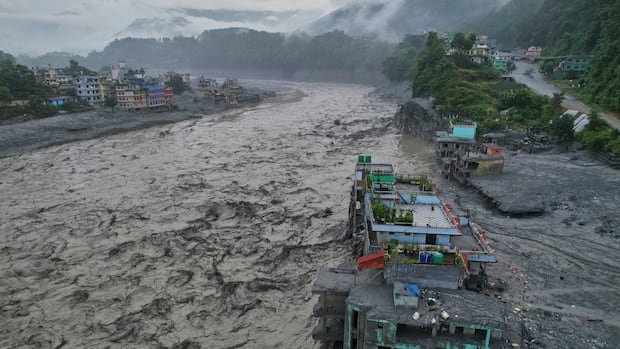
Authorities in Nepal have issued warnings of potential new flooding on Sunday, advising residents in flood-affected areas to stay vigilant as water levels in the Bhotekoshi River surged. Flood alerts were sent to people’s mobile phones early Sunday while rescue teams cleared a major highway linking Kathmandu to one of the hardest-hit regions by Wednesday’s devastating floods, which claimed a minimum of 800 lives and left over 3,000 individuals missing in Nepal and Tibet.
In Dhading, a severely impacted area in Nepal, some locals began returning to their destroyed homes to assess salvageable items. Amid homes with washed-out walls, residents were seen clearing mud and debris off balconies and searching for belongings in the mud. One man rescued his surviving chickens and secured them in his truck cabin.
Sharmila Tamang, a resident of Dhading, lamented, “Everything is gone. There’s nothing left, not even our home,” while salvaging belongings. Workers at a crucially damaged power plant initiated inspections on Sunday to evaluate the devastation. This plant caters to over 20,000 people in four districts.
In Galchhi town, a group of residents sought refuge on a nearby bridge, observing the powerful river flow. Some pointed out massive rocks carried downstream by the previous floods, while others were cautioned by whistles while standing on a suspension bridge.
The aftermath revealed homes, vehicles, and farm equipment protruding from thick sediment that engulfed entire villages. Sections of rice terraces collapsed into the river due to landslides. Nepal’s disaster agency reported a death toll of 788 with 2,502 missing, while Chinese authorities noted 16 deaths and 546 missing on their side of the border.
Residents continue to receive frequent flood alerts as homes and businesses in the flooded areas remain without electricity, with damaged power infrastructure hindering restoration efforts. The Prithivi Highway, a vital supply route to Kathmandu, faces repair challenges in some sections despite most of it being operational.
Residents in flood-affected villages expressed confusion and exhaustion due to constant flood warnings since the initial disaster. The destruction of bridges has isolated communities on either side of the river, complicating access.
The flash floods on Wednesday were triggered by a glacial collapse in the Himalayan region, causing a massive surge of water downstream in Tibet and Nepal. Nepal’s foreign minister emphasized the country’s disproportionate vulnerability to climate change impacts despite its minimal global emissions contribution.
Researchers have refrained from directly linking global warming to the recent catastrophe but highlighted the increased risk of such disasters in warming regions like the Himalayas due to human-induced activities.

