
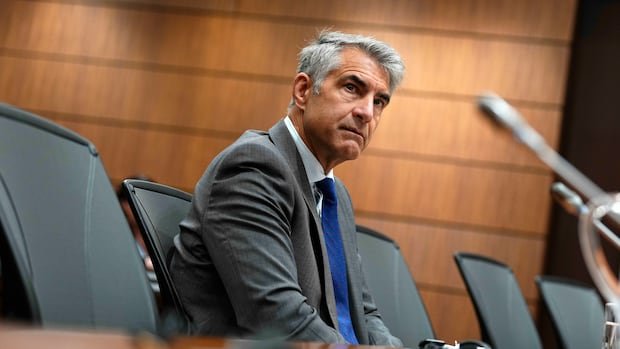
Meetings held between advocates of Alberta’s separation and American government officials are not required to be listed in Canada’s new foreign influence registry as they occurred before the registry was implemented, as per Canada’s foreign influence overseer, Anton Boegman. Boegman, speaking to the media post his appearance before a parliamentary committee, emphasized that the law outlines the specifics of his jurisdiction.
“The law became effective on Aug. 4,” noted Boegman. “Hence, past events may not fall under its purview. However, our current focus is on ongoing activities.”
Recent reports from the Globe and Mail revealed that individuals supporting Alberta’s independence had engaged with U.S. entities on both sides of the border as early as April. Additionally, CBC News disclosed that some of these interactions occurred in U.S. State Department offices in Washington, D.C., last year.
Boegman confirmed reaching out to over 60 individuals or groups involved in the Alberta referendum, including the Alberta Prosperity Project, a group acknowledged by the State Department for their meetings.
“These stakeholders are actively participating in the discourse,” he stated. “Our aim was to ensure their awareness of our legal requirements so they can register if needed.”
However, Boegman clarified that no outreach had been made to any American entities. He elaborated that his mandate encompasses individuals seeking to influence Canadian politics on behalf of a foreign government or entity, excluding those paid by foreign think-tanks or foundations to influence, which falls outside his jurisdiction.
“The administration of my mandate is distinct,” he explained. “Other agencies such as CSIS, RCMP, and Global Affairs Canada have roles to play in this domain, forming a collective response to such matters.”
Boegman could not confirm whether his office had received registrations from individuals influencing the Alberta referendum on behalf of a foreign government, or if these registrations would be included in the foreign influence registry before Albertans vote on Oct. 19.
“I have yet to review that information,” he mentioned. “I will be briefed on it this week.”
During his testimony before the House of Commons procedures and House affairs committee, Boegman disclosed that his office had received only 30 submissions by the Oct. 4 deadline to register existing arrangements, significantly lower than the estimated 2,422 individuals or organizations expected to require registration for foreign influence activities.
New engagements with foreign principals must be registered within 14 days. Presently, only two entries are visible in the public registry two months post its launch. A third entry, temporarily removed, will be re-published in due course.
Conservative MP Michael Cooper raised concerns over the low number of registrations received, highlighting the discrepancy between the actual submissions and Public Safety’s projections.
“It certainly raises doubts,” Cooper remarked.
Cooper also questioned Boegman about two privacy breaches within his office and persistent technical issues with the registry, despite Public Safety allocating $29.4 million for its IT systems.
Boegman defended the system’s setup as a “minimum viable product” for the launch on Aug. 4, emphasizing ongoing efforts to resolve any issues. He mentioned proactive measures to educate stakeholders on the registration requirements and pledged to decide on next steps after assessing the submitted registrations.

