The Parliamentary Budget Office has revised its economic growth projections for this year and the following year due to the impact of new U.S. tariffs and Canadian responses. The latest outlook from the federal budget watchdog forecasts a real GDP growth of 0.9% in the current year and 1.5% in 2027, down from the previous estimates of 1.1% and 1.6% issued in June.
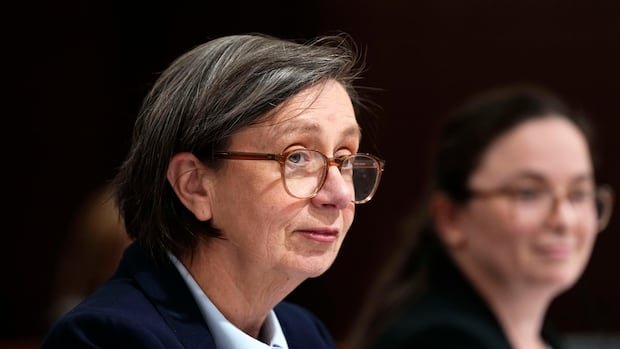
Annette Ryan, the parliamentary budget officer, highlighted the challenges facing Canada’s economic and fiscal outlook, attributing the downward revisions to additional trade measures and persistent uncertainty affecting the country’s production output.
Trade negotiations between Canada and the U.S. faltered in August, leading to the imposition of new tariffs and counter-tariffs. The PBO now anticipates a budgetary deficit of $63.3 billion for the 2026-27 fiscal year, peaking at $70.2 billion in 2027-28. These deficits are projected to be $3 billion higher annually on average compared to the previous estimates, primarily driven by new spending initiatives outweighing revenue growth.
Ryan emphasized the importance of monitoring the debt-to-GDP ratio as a key indicator of fiscal well-being, noting its expected steady increase over the coming five years. She stressed the pivotal role of recent capital investments in enhancing productivity and economic prosperity in shaping Canada’s long-term economic trajectory.
Looking ahead, the PBO anticipates the Bank of Canada to initiate policy rate hikes in early 2027 to maintain inflation expectations, reaching 2.75% by mid-year. In terms of inflation, the watchdog predicts that elevated energy prices will contribute to a 2.8% average annual inflation rate in 2026, followed by a slight easing to 2.4% in 2027.