
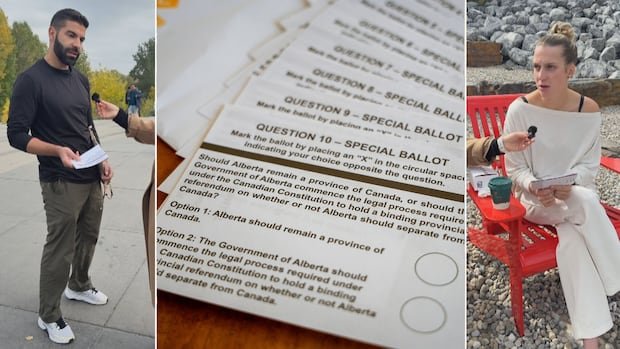
Carla Hudson Kam, head of linguistics at the University of British Columbia, finds the Alberta referendum questions complex due to their sentence structures and multiple clauses. She noted that the questions exceed the average reading level for most Albertans, including herself, requiring careful reading and analysis.
One particularly lengthy question, the eighth on the ballot, asks whether voters support Alberta opting out of federal programs to allocate funds to provincial initiatives. The official wording is much more detailed, involving possible amendments to the Canadian Constitution regarding federal program intrusion on provincial jurisdiction without losing federal funding.
The complexity of the questions, combined with their length, poses a challenge for voters, leading to potential confusion and the need for multiple readings. A readability test indicated that the questions are at a “college graduate” level, considered quite difficult to comprehend.
Despite efforts to provide clarity through information sessions and online resources, many Albertans still express confusion and uncertainty about the referendum questions. Election observers have reported that attendees at information events seem overwhelmed, and polling suggests that a significant portion of the population is not familiar with the non-separation questions.
Elections Alberta emphasizes the importance of understanding the questions before voting, offering a guide in multiple languages and allowing personal devices for assistance. Voters can seek help from election officers or bring a companion to aid in the voting process.
Hudson Kam advises voters to take the time to comprehend the questions themselves rather than relying on external sources for information. Making informed decisions on the referendum requires a clear understanding of the complex issues at hand.

