
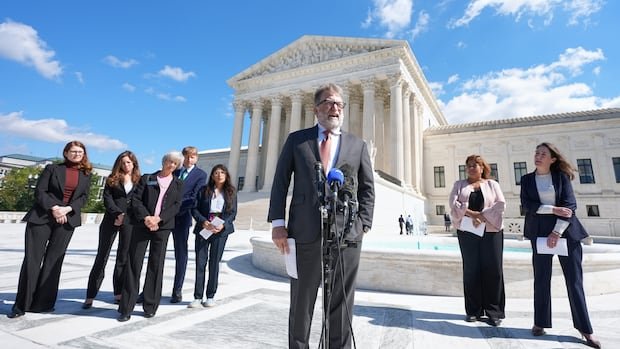
The U.S. Supreme Court deliberated on Monday the legality of local governments suing oil and gas companies in state courts to offset climate change costs, a matter potentially involving billions of dollars. Some justices expressed concerns about the broad scope of such litigation but were conflicted regarding the intricate federal and state legal issues raised by the case.
Officials in Boulder, Colorado, claim their lawsuit aims to hold Suncor, based in Canada, and ExxonMobil, based in the U.S., responsible for their role in climate change. They argue that the financial strain caused by escalating disasters like floods and wildfires burdens local communities, and the industry should share in those expenses.
Boulder city and county initially filed lawsuits against the oil companies in 2018, predating the devastating 2021 Marshall Fire, which razed nearly 1,100 homes and resulted in two fatalities, with damages estimated at $2 billion, marking Colorado’s most costly wildfire.
Energy companies argue that a surge of state court lawsuits is not the appropriate avenue to address the global issue.
Various governments in politically left-leaning regions across the U.S. have initiated similar lawsuits seeking damages potentially amounting to billions of dollars, mirroring a global trend of legal actions leveraging court intervention.
Justice Brett Kavanaugh warned that a victory for Boulder could financially cripple not only the oil companies but also other potential defendants, as any entity could become susceptible to such lawsuits.
Suncor and Exxon contend that the Clean Air Act grants the federal government, not states, the authority to regulate emissions. They are supported by the Trump administration, which deems the lawsuits as an unconstitutional bid to regulate emissions causing climate change and extend Colorado’s law beyond its borders.
The justices highlighted the routine involvement of state courts in nationwide issues, questioning the uniqueness of this case. They are also considering a jurisdictional query that could offer an alternative to an immediate decision.
The absence of Justice Samuel Alito, who recused himself due to stock ownership in oil companies, raises the prospect of a tied vote, potentially leaving intact a Colorado Supreme Court ruling allowing the case to proceed.
The court session featured arguments from lawyers representing both sides, with the industry’s counsel emphasizing that climate change is a critical issue but contending that using lawsuits to address it is misguided.
The lawsuit, according to Boulder’s counsel, aims to hold the companies accountable for allegedly misleading the public about their role in global warming by burning fossil fuels, rather than regulating emissions or halting oil and gas production.
Justice Elena Kagan likened the climate case to prior state lawsuits against the tobacco and opioid industries, while the industry’s lawyer emphasized that the alleged harms are widespread, extending beyond national borders.
The U.S. Supreme Court, mainly conservative, has shown skepticism towards environmental regulations in the past, including a recent decision limiting the EPA’s ability to regulate carbon dioxide emissions from power plants.
A ruling is anticipated in the coming months, likely by the end of June, according to Reuters.

