
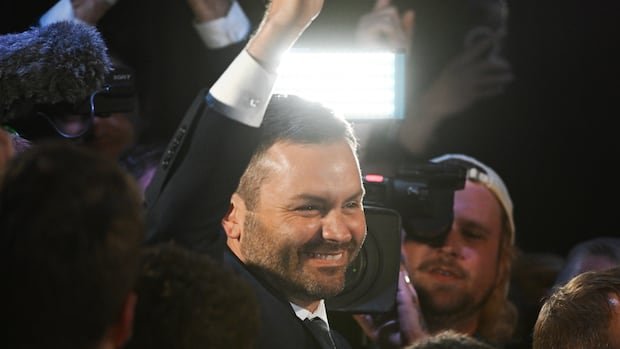
Quebec’s electoral boundaries have been completely revised, resulting in the Parti Québécois securing enough seats to establish a minority government. Paul St-Pierre Plamondon managed to significantly increase his party’s representation from three seats in 2022 to 59 seats following the latest election. Despite this achievement, the PQ leader fell short of obtaining a majority, which may complicate the implementation of his agenda, including the proposed Quebec independence referendum.
In his triumphant address, St-Pierre Plamondon pledged to collaborate with other political factions and maintain a transparent dialogue with Prime Minister Mark Carney, hinting at potential strains in the relationship with Ottawa. Notably, he extended a message in English to “English-speaking friends in Quebec,” emphasizing his commitment to govern for all Quebec residents, emphasizing their shared future.
Although St-Pierre Plamondon expressed aspirations for Quebec’s sovereignty, the likelihood of an immediate referendum appears slim. He mentioned a potential delay until 2029 or 2030, citing the departure of U.S. President Donald Trump. However, minority governments in Quebec typically have shorter terms, raising uncertainties about the referendum’s timing.
On the other hand, the Coalition Avenir Québec (CAQ), which had previously secured a significant majority, appears to have been entirely marginalized, failing to secure any seats in the latest election. The party’s leader, Christine Fréchette, acknowledged the defeat in her concession speech, raising concerns about the party’s future viability.
The Liberal Party witnessed a stronger-than-anticipated performance, projecting an increase from 19 to 40 seats. Liberal Leader Charles Milliard highlighted the obligation for the PQ to consider proposals from other parties in the absence of a majority government. While expressing willingness to collaborate on various issues, he firmly opposed any potential cooperation on a referendum.
Furthermore, the Conservative party made significant strides, transitioning from zero seats in 2022 to 19 seats following the election. Leader Éric Duhaime, focusing on fiscal policies, celebrated the party’s success and positioned it as a viable ally to the PQ on shared priorities.
The election results have also reignited discussions about electoral reform in Quebec, with promises from the PQ, Conservatives, and Québec Solidaire to overhaul the voting system gaining momentum. The projected formation of a government by the PQ with less than 30% of the popular vote has brought attention to the province’s first-past-the-post electoral system, prompting calls for immediate review.

