
Thursday signifies a crucial moment in the advancement of a plan to build a fresh bitumen pipeline from Alberta to the western part of Canada. Prime Minister Mark Carney and Alberta Premier Danielle Smith are set to convene in Fort McMurray at 9 a.m. MDT to reveal the next phase to hasten a significant infrastructure initiative.
In May, a pact between the federal and Alberta administrations established an October 1 deadline to determine whether to classify the pipeline as a project of national interest under Bill C-5, also known as the Building Canada Act. This designation could potentially make it the initial project to undergo expedited federal approvals and regulatory assessments under the new legislation.
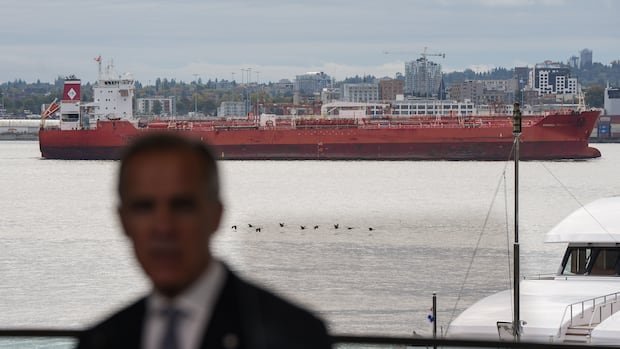
Earlier this week, Carney visited Vancouver to announce $1.2 billion in funding for ocean protection, during which he endorsed the pipeline proposition. Carney emphasized that this endeavor would broaden the country’s economy, generate nearly 150,000 fresh employment opportunities nationwide, and reduce reliance on the United States. He stated that the proposed route would closely follow the southern path of the existing Trans Mountain Pipeline, with the North Coast tanker ban remaining in force.
In July, detailed information about the proposed project was disclosed by the federal and Alberta governments, estimating a price range of $35.2 billion to $43.7 billion. The pipeline would be co-owned by the Alberta government, the federally owned Trans Mountain Corporation, and the Calgary-based Pembina Pipeline Corporation. Covering a distance of 1,250 kilometers, the projected route from Bruderheim to the Roberts Bank terminal in Delta, B.C., is anticipated to transport over one million barrels of bitumen daily for export to Asian markets.
The agreement hinges on the implementation of a carbon storage initiative named Pathways, utilizing a pipeline network to convey carbon emissions from various sites in northern Alberta to an underground storage facility. Smith has expressed her desire to see construction commence by 2027.
The looming deadline precedes Alberta’s October 19 referendum, which could potentially trigger a binding vote on the province’s separation from Canada.
Despite potential obstacles, including the federal government’s commitment to uphold the North Coast tanker ban and an agreement with British Columbia, challenges from First Nations groups and environmental organizations persist. Multiple Indigenous groups have cautioned against expediting the project without adequate consultation, while environmental advocates have raised concerns about the detrimental impact on marine life and climate goals.
Overall, the proposed pipeline project faces a mix of support and opposition, with various stakeholders voicing their perspectives on its potential implications.

