
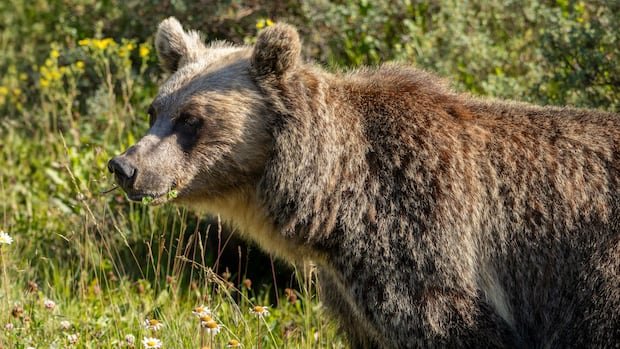
The Alberta government has reported a significant increase in the number of grizzly bears killed by hunters authorized under the Wildlife Management Responder Network. This year, 13 grizzly bears have been killed through the program, with 11 of these deaths occurring in the past three-and-a-half months, primarily due to livestock predation.
Since its establishment in June 2024, a total of 14 grizzly bears have been killed by hunters through the program, with only one bear being killed in 2025. The province’s pool of “problem wildlife” responders consists of qualified Alberta hunters selected for the program. These hunters are called upon by the province when a situation arises that necessitates the killing of a grizzly bear.
The provincial ministry emphasized that its approach to wildlife management is based on science and expert advice, focusing on public safety, conflict reduction, and grizzly bear population recovery. Grizzly bears were designated as a threatened species by the Government of Alberta in 2010, and management decisions consider factors such as attacks on livestock, pets, or humans.
Although hunting grizzlies has been banned in Alberta since 2006, exceptions are made for Indigenous hunters for subsistence or cultural purposes. The province clarified that grizzly removal through the Wildlife Management Responder Network is not considered hunting, as authorizations are granted on a case-by-case basis without tags. The program allows responders to keep the bear’s meat, hide, and other parts except for the gallbladder.
Despite the rise in grizzly bear killings through the responder program, the province stated that the overall human-caused bear mortality in 2026 is lower than usual, with a focus on achieving recovery goals and managing grizzlies where necessary. The majority of grizzly bear killings through the program have occurred in southwestern Alberta, an area with a high grizzly bear population density.
Efforts to promote effective wildlife coexistence in bear country include programs for conflict mitigation, population monitoring, and lethal removals when required. The provincial government has invested in initiatives to prevent conflicts between large carnivores and rural properties in southwestern Alberta. Although an estimated 1,000 grizzlies inhabit Alberta currently, there has not been a provincial grizzly bear population study since 2018.

