
Health professionals are working urgently to assist the most vulnerable individuals in the Kenora, Ont., region after experiencing over 60 drug poisonings within a span of two days. The Northwestern Health Unit (NWHU) has issued separate drug alerts to warn drug users and community members about potentially hazardous substances in circulation.
One alert, issued on Thursday, highlighted a suspected fentanyl substance sold as down. Another alert issued on Friday focused on a substance called clodesnitazene, which is particularly concerning due to its unknown potency. Described as a synthetic nitazene opioid, clodesnitazene was detected in a rock-like solid sample, along with other substances like benzodiazepine, carfentanil, an animal tranquilizer, caffeine, and dimethylsulphone.
The rise in overdoses has not only affected Kenora but also Atikokan and Ignace, as reported by the health unit. Shelly McLarty, manager at NWHU’s sexual health and outreach services program, expressed concern about the emergence of clodesnitazene in the region, suggesting a potential trend of quicker substance introduction from larger cities.
Last year, NWHU had the fourth-highest opioid-related death rate in Ontario, with Thunder Bay District Health Unit leading with a rate significantly higher than the provincial average in 2025. The Kenora Indigenous-led Homelessness and Addiction Recovery Treatment (HART Hub) offers crucial services to those facing homelessness, substance use, and mental health challenges.
The recent spike in drug poisonings prompted responses from various organizations including the Ontario Provincial Police, emergency medical services, and Waasegiizhig Nanaandawe’iyewigamig (WNHAC), which serves Indigenous communities. Megan Wesley, WNHAC’s interprofessional team manager, mentioned handling 29 overdoses on Friday alone, with eight requiring CPR.
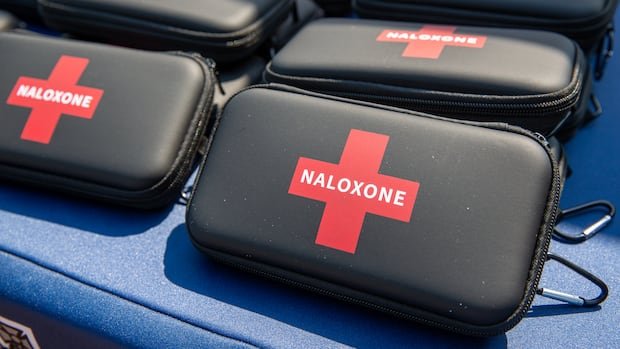
While no deaths have been confirmed, the combination of multiple drugs has made the situation challenging. The health unit advises drug users to start with small amounts, use new drug equipment to prevent infections, and avoid using drugs alone. Free drug test strips and naloxone kits are available through NWHU, and individuals can utilize resources like the LifeguardConnect app and the National Overdose Response Service for assistance in case of emergencies.

