
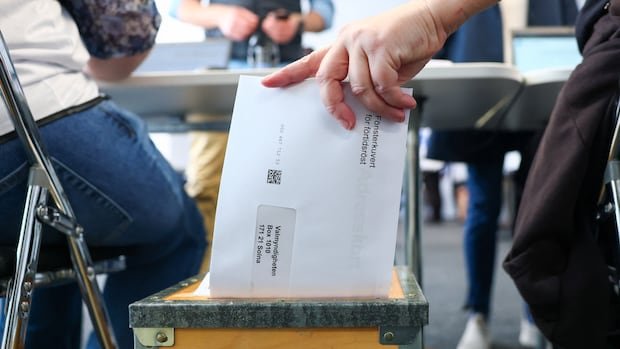
Swedish citizens cast their votes in a tightly contested election on Sunday, with the potential to usher in a far-right party to power for the first time or steer the nation back towards its traditional liberal values. Recent polls indicated that the center-left opposition held a slight edge over the current right-wing coalition led by Prime Minister Ulf Kristersson, who has been narrowing the gap in the final stages of the campaign. Kristersson has expressed willingness to include the Sweden Democrats in the government if his coalition emerges victorious.
Advocates of the right-wing bloc argue that their policies have effectively reduced gang violence and significantly curtailed immigration, positioning a win as an endorsement of their approach for the future. Critics, on the other hand, contend that these policies are eroding civil liberties and pressuring immigrants to assimilate into Swedish cultural norms or face expulsion.
Polling stations across the country opened at 8 a.m. local time on Sunday, with exit polls expected shortly and preliminary results anticipated around 2 p.m. ET. The outcome of the election could have far-reaching implications, with concerns raised by voters in areas like Rinkeby, a socially disadvantaged community in northern Stockholm. Some residents expressed fears of heightened discrimination against Muslims and immigrants if the Sweden Democrats gain more influence.
While the right-wing bloc has already outlined plans to form a coalition government led by Kristersson, the path to power for his rival, Magdalena Andersson, remains uncertain. The election results could hinge on the performance of the Liberal Party, which needs to surpass a four percent threshold to secure parliamentary seats and potentially bolster the right-wing alliance.
The Sweden Democrats, who have supported Kristersson’s minority government in parliament for the past four years, have established credibility within the broader right-wing coalition. Both sides have converged on key voter priorities such as supporting Ukraine, enhancing military capabilities, and providing relief to households grappling with the rising cost of living.
While there is general consensus among the opposition parties on the need for increased welfare and public spending, divisions persist on various issues, including immigration policies and economic strategies. These differences could pose challenges for forming a stable government, particularly as certain parties have ruled out collaborating with others on specific issues.

