
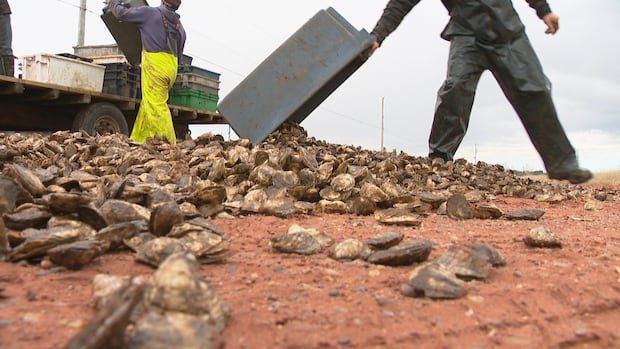
Kaila Richard, an oyster farmer in western Prince Edward Island (P.E.I.), reminisces about her late father as she tends to the family farm in Dock River near Alberton, which she now runs with her husband, Bruce Richard. The couple invested heavily in upgrading the farm, but their efforts are in jeopardy due to the outbreak of two devastating diseases affecting the Island’s oyster industry.
The diseases, known as MSX and dermo, were first detected in P.E.I. waters in 2024 and 2025, respectively, leading to widespread mortality among oysters. Farmers across the island are grappling with significant losses, with some reporting up to 95% dead oysters, creating a dire situation described by Bruce as a “massacre.”
In response to the crisis, both provincial and federal governments have introduced support programs, offering financial relief, mental health assistance, and approval for importing disease-resistant oyster seed. However, the lengthy three-year cultivation process for these seeds poses challenges, with farmers emphasizing the urgent need for sustained financial aid to survive in the interim.
Jeff Noye, an oyster grower and Tyne Valley’s mayor, highlighted the cultural significance of oyster farming on the island, expressing concerns about the potential takeover by larger corporations if immediate support is not provided. The situation mirrors past challenges faced by mussel farmers in the Maritimes two decades ago when invasive species disrupted the industry.
Peter Warris, executive director of P.E.I. Aquaculture Alliance, emphasized the importance of ongoing financial assistance to ensure the industry’s survival and recovery. He stressed the need for a comprehensive support strategy to help individual farmers weather the crisis and prevent consolidation by larger companies.
Despite the hardships, oyster farmers remain resilient, with Kaila and Bruce determined to fight for their family business’s survival. The couple, along with other industry members, are navigating uncertain times, hoping for a brighter future with the potential of disease-resistant seed to revitalize the oyster industry.
The challenges faced by the oyster industry in P.E.I. have prompted calls for increased income support and strategic interventions to safeguard the livelihoods of local farmers and preserve the unique cultural heritage associated with oyster farming on the island.

