
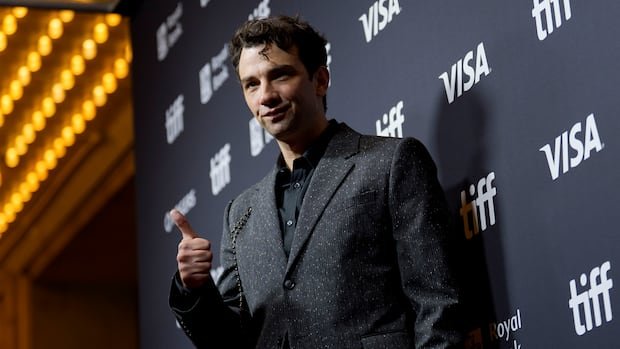
Amid escalating tensions in the film sector between Canada and the United States, Canadian actor Jay Baruchel expressed unwavering confidence in his country’s ability to compete with its American counterpart. Speaking at the Toronto International Film Festival (TIFF) prior to the world premiere of “The Stunt Driver,” Baruchel emphasized Canada’s historical trend of exceeding expectations and navigating challenges successfully.
Joining a cohort of Canadian actors at TIFF, Baruchel, recognized for his roles in movies like “BlackBerry” and “She’s Out of My League,” leads the cast of the new film inspired by stuntman Ken Carter’s real-life story. In the 1970s, Carter, known as The Mad Canadian, endeavored to leap over the St. Lawrence River in a rocket-powered car, partly in a bid to outshine his American rival, Evel Knievel.
The film’s release amid the ongoing trade dispute between Canada and the U.S. injected a heightened sense of urgency and relevance, according to Baruchel. He described the narrative as a defiant declaration against condescension and dismissal.
The cultural clash surrounding the trade war intensified ahead of TIFF when U.S. President Donald Trump spotlighted Canada in connection with a proposed federal incentive aimed at retaining U.S. film productions domestically. This development raised concerns within the Canadian film industry.
Over the past century, a robust connection has thrived between the entertainment sectors of Canada and the U.S., fostering a collaborative environment for movie-making, as noted by TIFF CEO Cameron Bailey. The festival’s opening film, “Being Heumann,” a U.S. production filmed in Toronto, exemplifies this enduring partnership.
Against this backdrop, Canadian actors and artists at TIFF voiced their commitment to championing Canadian creativity. Laurence Leboeuf, portraying Gloria, Ken Carter’s wife in “The Stunt Driver,” underscored the role of art in reflecting national identity and values.
Toronto native Devon Bostick, co-author of “Closing Night,” another TIFF premiere, depicted Canada’s current film landscape as a period of renaissance, praising the country’s vibrancy and resilience. Meanwhile, concerns about the Canadian film industry amidst trade tensions seemed to evoke more worry for the U.S. in Bostick’s perspective.
Comedian and actress Mary Walsh, known for her work on “This Hour Has 22 Minutes,” echoed the sentiment of strength and unity within the Canadian film community amidst external pressures. Walsh, promoting the Netflix miniseries “Below,” hailed the industry’s growth and solidarity in the face of external threats.
In her remarks, Walsh, a native of St. John’s, highlighted the potential silver lining in heightened U.S.-Canada tensions, suggesting that such challenges could galvanize support for Canadian culture and foster a renewed sense of national pride and unity.

