

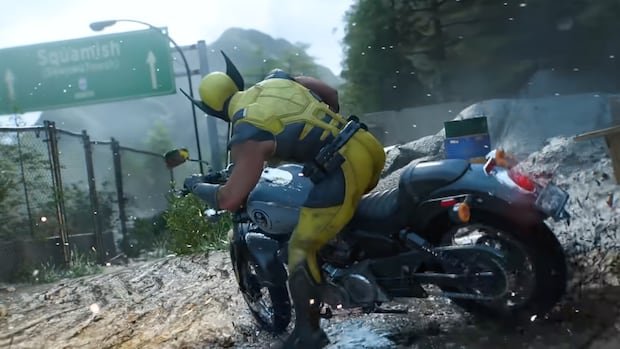
A new video game featuring the character Wolverine includes signs in the Squamish Nation’s language, expected to attract a large global audience upon its release on Sept. 15 for PlayStation 5. The game, titled Marvel’s Wolverine, showcases various locations in British Columbia, such as North Vancouver, the Lions Gate Bridge, and the Sea-to-Sky Highway. During a scene where the main character Logan, also known as Wolverine, is riding a motorcycle on the highway, two signs in the Sḵwx̱wú7mesh sníchim (Squamish language) are visible, indicating the words for Whistler – Sk̲wik̲w – and Squamish – Sḵwx̱wú7mesh.
Gavin Goulden, the senior art director based in Vancouver, emphasized the importance of accurately representing Canadian elements in the game, given Wolverine’s origin in Alberta. He highlighted Wolverine as a notable Canadian superhero and the significance of integrating real Canadian locations into the game. The inclusion of the Squamish Nation’s language in a video game, particularly one featuring British Columbia, is considered a significant achievement by gaming experts.
Sxwíxwtn (Wilson Williams), the chairperson of the Squamish Nation, expressed pride in seeing their language prominently displayed in the game as Wolverine traverses their territory. This inclusion is seen as a moment of visibility and acknowledgment of the ongoing vitality of their language and culture.
Cary Brisebois, a seasoned video game developer and member of the game development advisory board at Vancouver Film School, commended the game for subtly incorporating Indigenous representation. He appreciated the acknowledgment of Indigenous presence in the game without tokenizing it, emphasizing the importance of showcasing the land where they reside.
Sarah Christina Ganzon, an assistant professor at Simon Fraser University specializing in game studies, welcomed the portrayal of Canada in the game, noting the rarity of seeing a Canadian character like Wolverine depicted in a Canadian setting.
Aliki Marinakis, an Indigenous language programs manager at the University of Victoria, praised the inclusion of the Squamish language in the game as a significant step towards representation in pop culture. She emphasized the importance of Indigenous children seeing themselves reflected in various aspects of society, including entertainment.
Nikki Johnston from Tourism Squamish highlighted the region’s popularity for filming due to its picturesque landscapes, noting the potential impact of the game on destination exposure. While previous Marvel games have garnered global popularity, the full extent of the game’s influence on Squamish’s visibility remains to be seen.

