

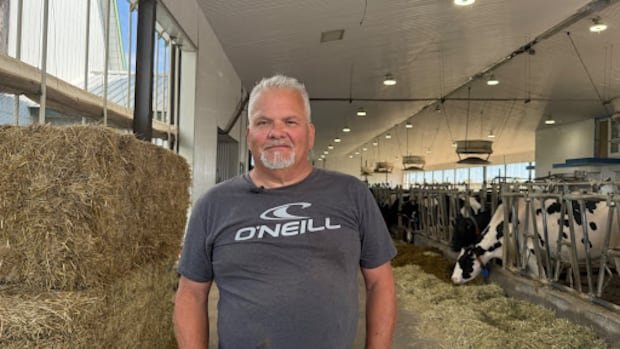
Daniel Legault, an established farmer, has a long family history in farming dating back to 1929. Over the past three decades, he has managed Ferme Legault, a dairy and cereal farm in Rigaud, Quebec, with the help of his wife and son. However, the future of the farm is uncertain due to a proposed high-speed rail project that could potentially divide his land and disrupt operations.
The high-speed rail project, aimed at reducing travel times between Toronto and Quebec City, may cut through Legault’s property, causing significant challenges for the farm’s daily operations. Legault expressed concerns about the project’s potential impact on his ability to access his fields and manage his livestock effectively.
The proposed train route could sever the farm, making it logistically impractical for Legault to navigate around the rail line multiple times a day. This disruption could have severe consequences for the farm’s productivity and profitability.
Furthermore, the impact of the rail project extends beyond Ferme Legault, affecting approximately 1,700 properties, including 500 farms, between Ottawa and Montreal. The lack of communication and transparency from the project leaders has left many farmers, including Legault, uncertain about their future.
Jérémie Letellier, president of the Fédération de l’UPA de la Montérégie, expressed concerns about the devastating effects the rail project could have on farming communities in Ontario and Quebec. He emphasized the potential for farms to reorient or cease operations due to the project’s implications.
Alto, the company behind the high-speed rail project, has promised to limit the impact on agricultural communities and ensure fair compensation for affected businesses. However, the lack of detailed information and consultation with farmers like Legault has raised doubts about the project’s overall impact.
As discussions and planning for the rail project continue, Legault and other farmers remain apprehensive about the future of their livelihoods. The uncertainty surrounding the project has put their long-standing farming traditions and businesses at risk.

