

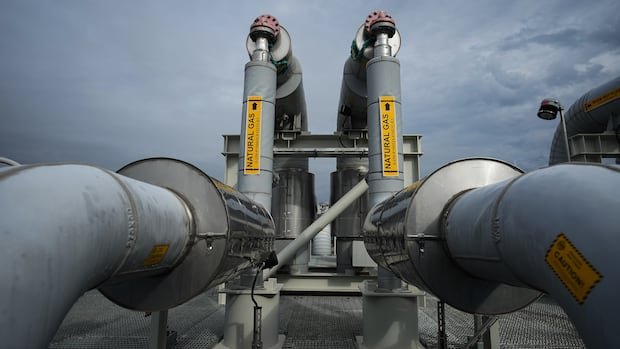
In a recent speech, Prime Minister Mark Carney emphasized the significant role Canada plays in fueling American growth through exports of natural gas to the U.S. He raised the question of the potential consequences if Canada were to cease these shipments.
While energy products like oil and natural gas have not been utilized as bargaining chips in the ongoing Canada-U.S. trade tensions, the idea has sparked debate. Alberta Premier Danielle Smith has consistently opposed the notion, while Ontario’s Doug Ford advocates for keeping all options open.
Carney highlighted that the U.S. heavily relies on Canada for its energy needs, with Canada supplying 99% of their natural gas imports, 85% of their electricity imports, and 60% of their crude oil imports. The import-export dynamics between the two countries are intricate, with natural gas flowing in both directions across the border.
Although Canada’s natural gas exports to the U.S. may seem relatively small compared to domestic U.S. production, the geographical distribution of these deliveries is crucial. For instance, regions like the Pacific Northwest heavily depend on Canadian natural gas, with over 90% of gas supply coming from Canada.
Wood Mackenzie’s Dulles Wang points out that halting natural gas shipments to the U.S. would have adverse effects on Canada, potentially resulting in oversupply and price drops due to storage capacity constraints. Wang warns that cutting off the U.S. as a customer could harm Canada’s economy and lead to a negative impact on gas prices.
To diversify its market, Canada has been exploring opportunities to export liquefied natural gas to non-U.S. markets. Initiatives like the LNG Canada facility in Kitimat, B.C., which started shipping to Asian markets, aim to reduce dependency on the U.S. market. The government’s support for such projects is seen as vital for reducing reliance on the U.S. and expanding export opportunities for Canadian natural gas.

