

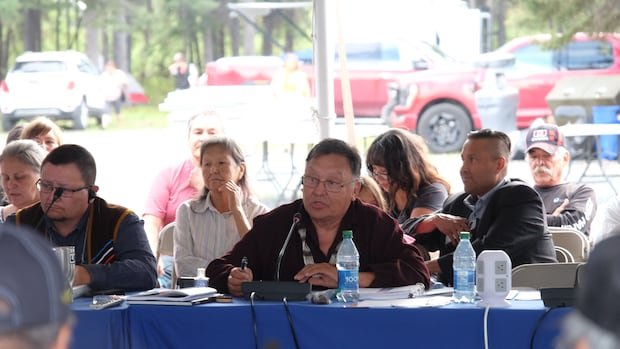
Dehcho Grand Chief Herb Norwegian frequently hears accounts of locals visiting health facilities only to receive basic treatment like Tylenol and then being promptly discharged. He expressed concern that staff often assume patients are intoxicated as their initial inquiry, rather than focusing on providing proper care.
A recent series of recommendations aimed at enhancing healthcare in the Dehcho region of the N.W.T. underscore the importance of having trustworthy healthcare professionals, according to some residents. Norwegian emphasized the significance of improving the interpersonal skills and approach of medical staff towards patients.
The recommendations stem from an investigation into the untimely deaths of three Dehcho residents in early 2025: Wesley Marcellais, 44, Hilary Norwegian, 34, and Avery Burke, 6. Families of the deceased and certain N.W.T. officials argue that these fatalities could have been prevented and highlight disparities within the territory’s healthcare system.
Norwegian stressed the need to recruit and retain medical staff in communities by fostering an environment that encourages professionals to remain in their positions, acknowledging the challenges associated with this endeavor.
In response to the deaths, MLAs passed a motion in March 2025 urging the territory’s health minister to appoint an investigator to probe the incidents. Health Minister Lesa Semmler presented the investigator’s recommendations in June, but the Department of Health and Social Services (HSS) has deemed the full report and findings confidential. Semmler declined an interview with CBC News, citing ongoing review of the findings.
The 18 recommendations include defining staff roles in healthcare, ensuring adequate staffing levels, and providing necessary medical equipment at all healthcare facilities. Norwegian emphasized that while these aspects are crucial, building trust between healthcare providers and patients has the most significant impact.
In Fort Providence, Elder Joachim Bonnetrouge praised the quality of community care, attributing it to the long-term presence of dedicated healthcare workers. Norwegian acknowledged the nationwide shortage of doctors and nurses, making recruitment to northern regions challenging.
Encouraging youth in the Dehcho to pursue careers in healthcare is one proposed solution, but resource limitations pose a significant obstacle. Norwegian advised residents in road-accessible communities to seek care in Yellowknife if necessary, while acknowledging the challenges faced by communities reliant on medevacs.
Jason Sutherland, a health services and policy professor at the University of British Columbia, noted that providing healthcare in remote areas is a persistent challenge across Canada. He endorsed the investigator’s recommendations and emphasized the importance of implementing all 18 suggestions for improved healthcare access.
Former N.W.T. health minister Julie Green expressed hope that the recommendations would be implemented but raised concerns about the lack of a concrete plan or accountability framework for their execution. She emphasized the need for the government to prioritize and strategize resource allocation to address deficiencies in healthcare services.
The health department anticipates releasing more details in the fall regarding its next steps in response to the recommendations.

