

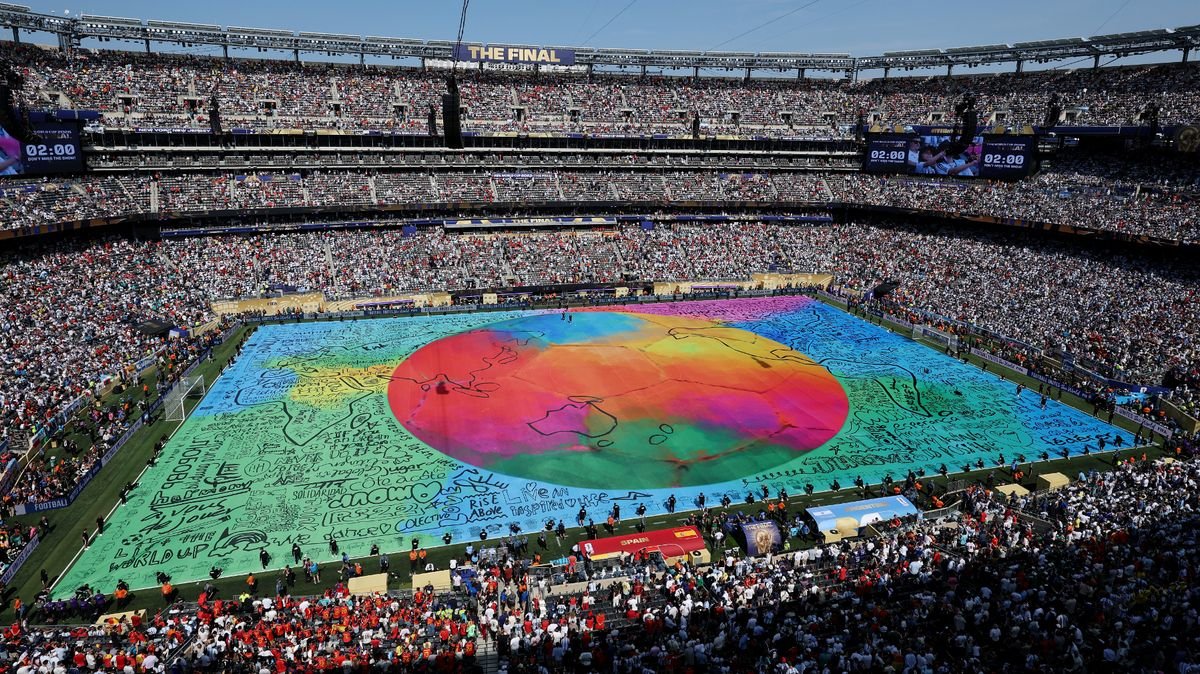
The World Cup final, known for its pure sporting essence, took an unexpected turn as FIFA decided to revamp the halftime break with flashy entertainment reminiscent of a shopping center opening.
Prior to Spain’s trophy lift, fans were treated to a peculiar halftime show featuring a blend of elements like a Temu performance, Argentina’s UFC-style antics, and Donald Trump’s enthusiastic display as if he had clinched victory, saved a penalty, and constructed the stadium single-handedly. This shift towards Americanization in the World Cup was marked by grandiose spectacles, amplified presentations, prolonged intermissions, and heavy sponsorship integration, overshadowing the essence of the game itself.
FIFA’s introduction of despised hydration breaks strategically timed for commercial advertisements had already disrupted the flow of matches, raising questions about prioritizing player welfare over commercial interests. The essence of football lies in its continuous momentum and suspense, which FIFA seemed to overshadow with excessive commercialization and interruptions for promoting various products.
The halftime show during the final, criticized by Wayne Rooney as subpar, featured global icons like Madonna, Justin Bieber, Ronaldo, and Ronaldinho, accompanied by elaborate performances that seemed excessive and out of place. Instead of celebrating football brilliance, these legends were reduced to mere props in a spectacle resembling a poorly organized school talent show, complete with excessive gimmicks and distractions.
The final match also witnessed a controversial turn with Argentina’s aggressive play escalating into UFC-like behavior, reflecting a lack of sportsmanship and crossing ethical boundaries. Such conduct demands strict penalties from FIFA to maintain the integrity of the game and uphold standards of fair play.
Furthermore, the presence of Trump at the event stirred controversy, with his frequent booing becoming an unexpected highlight of the evening. His prolonged presence during the trophy presentation, alongside Spain, created a surreal moment akin to an unwelcome guest overstaying their welcome, disrupting the celebration and drawing attention away from the actual winners’ achievement.
In this spectacle of mixed entertainment, FIFA’s inability to control the situation and prioritize the essence of the game over commercial gains highlighted the organization’s shortcomings in preserving football’s authenticity and dignity. The World Cup final, once a pinnacle of sporting excellence, turned into a chaotic blend of misplaced priorities and unnecessary distractions, tarnishing the spirit of the game.

