

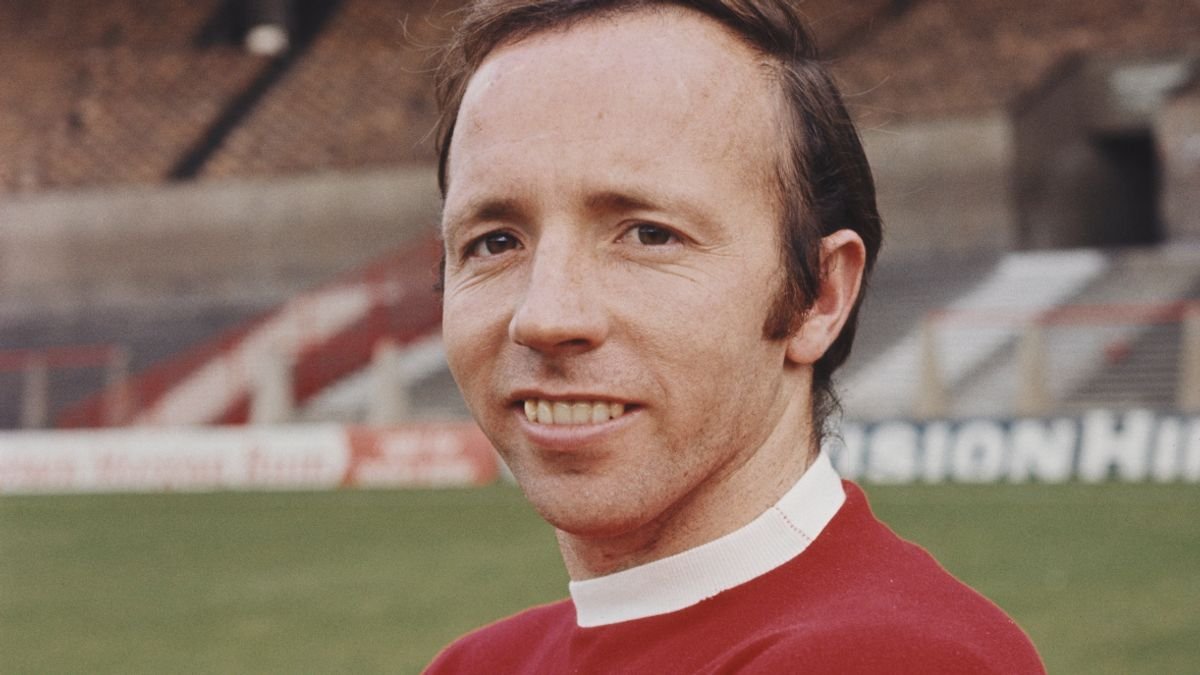
A coroner stated that the repetitive act of heading a football played a role in the passing of Nobby Stiles, a World Cup champion from England. Stiles, aged 78, who previously competed for Manchester United and was part of the victorious 1966 World Cup team, succumbed to severe dementia. Throughout his career, he headed the ball approximately 140,000 times, as revealed during the inquiry at Stockport Coroner’s Court.
Examination of Stiles’ brain revealed the presence of severe dementia due to Alzheimer’s disease and chronic traumatic encephalopathy (CTE), a condition associated with head injuries from heading a football. Dr. Daniel Du Plessis, a neuro-pathology expert, firmly attributed Stiles’ CTE to the extensive heading of the ball.
Born in Manchester in 1942, Nobby Stiles was known for his robust defensive play as a midfielder, representing England 28 times and making nearly 400 appearances for Manchester United. His demise in October 2020 prompted his family to advocate for increased support from football authorities for former players dealing with injuries sustained during their playing days.
John Stiles, who heads the Football Families for Justice (FFJ) group, is urging football governing bodies to take more action after his father was compelled to sell his championship medals to cover dementia care costs. Several ex-footballers and their families are pursuing legal action against the Football Association, the Football Association of Wales, and the English Football League, alleging negligence and breach of duty of care.
Recent investigations into the death of Gordon McQueen, a former Scotland, Manchester United, and Leeds United defender, indicated that heading the ball likely contributed to a brain injury that played a role in his passing. McQueen was also diagnosed with chronic traumatic encephalopathy (CTE), leading to concerns raised by his daughter, Hayley McQueen, regarding the health of England’s 1966 World Cup-winning team members.
The FA, in collaboration with the Professional Footballers’ Association (PFA), co-funded a study in 2019 that highlighted footballers’ increased risk of neurodegenerative diseases. As a response, the FA plans to phase out heading in youth football up to under-11 age groups by 2026.

