

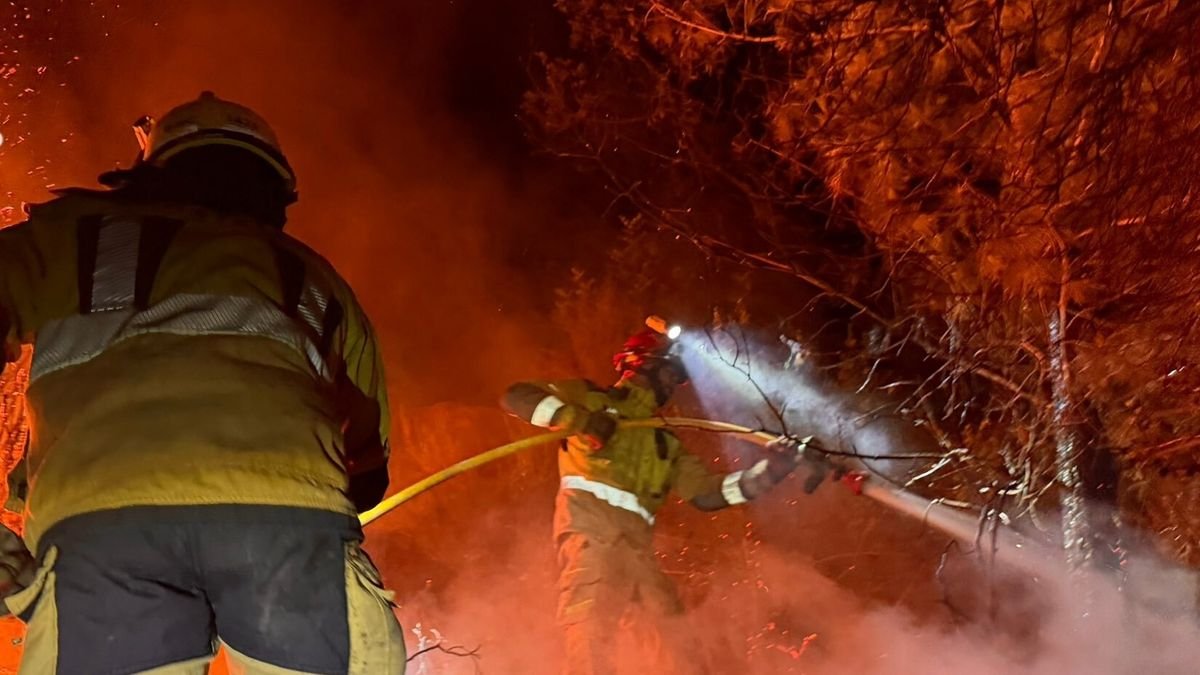
Wildfires are currently spreading through popular vacation destinations in Spain, Greece, France, and Portugal. Travellers are advised to ensure their phones are configured to receive emergency alerts as rapidly moving fires force thousands to evacuate their residences in parts of Europe. The flames have scorched nearly 50,000 acres of land across southern Europe, equivalent to the size of the entire city of Liverpool.
Authorities have prohibited spectators from attending a stage of the Tour de France due to the volatile conditions described as a “powder keg.” Emergency services are grappling with rapidly expanding fires after unprecedented early summer heatwaves struck Europe, with temperatures surpassing 40C.
Anticipating a rise in temperatures this week, concerns mount over the potential for additional fires to ignite. Although the UK has witnessed fewer wildfires compared to 2025, the risk of more intense wildfires looms if the scorching and dry weather persists, posing challenges for fire and rescue services.
In the Costa Brava’s popular Playja d-Aro beach resort, approximately 150 individuals, including 70 children from a holiday camp, were evacuated. In eastern Spain, firefighters battled flames in the Sierra de Espadan Natural Park with over 200 emergency personnel aided by the military and aircraft. Meanwhile, wildfires in Catalonia have ravaged 2000 hectares of forest, prompting authorities to advise residents to remain indoors.
In the French Pyrenees near the Spanish border, 700 firefighters are struggling to contain a large wildfire that led to the evacuation of over 10,000 people. The fire has nearly tripled in size since Sunday, coming dangerously close to residences. The Pyrénées-Orientales fire chief emphasized the increasing impact of climate change on fire incidents and urged support for firefighting efforts.
International reinforcements have been dispatched to central Portugal’s Vouzela area, where firefighters continue to battle a massive fire. Toxic smoke from a recycling plant engulfed by flames in Thessaloniki, Greece, has led residents to stay indoors with windows and doors shut.
The Foreign Office advises caution in Greece due to potential extreme natural events such as wildfires and earthquakes. To receive alerts about nearby incidents, ensure your mobile phone is set up for emergency notifications.

