

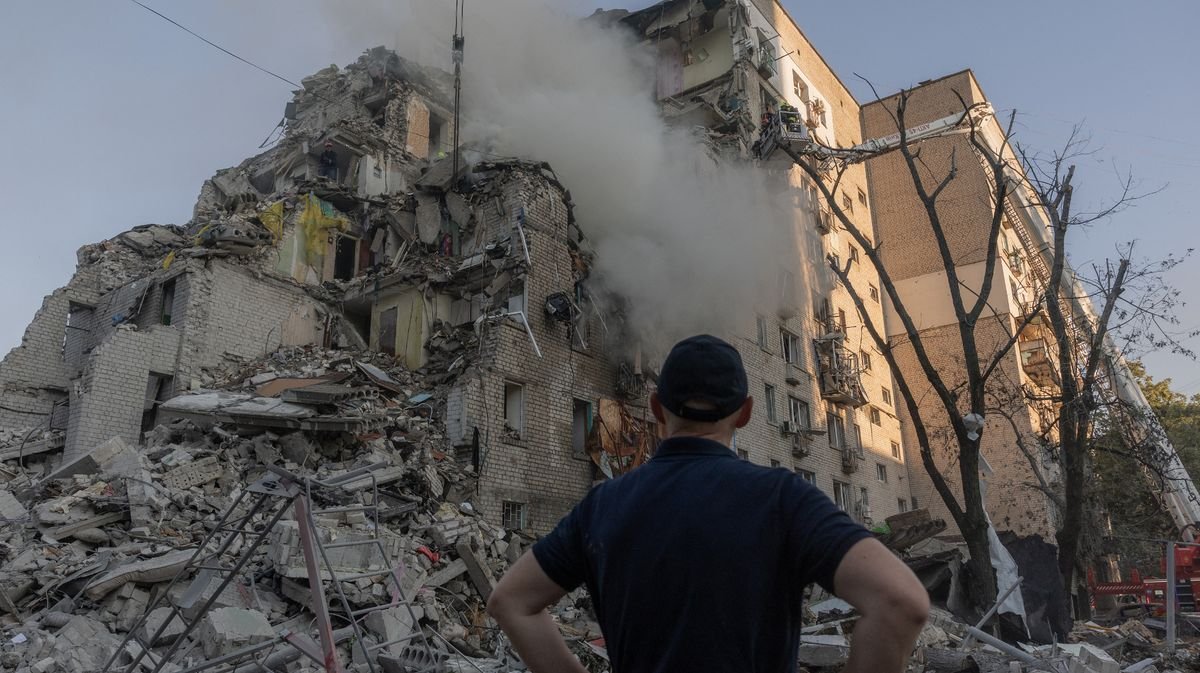
Russian President Vladimir Putin has commanded a relentless onslaught on Ukraine, unleashing a barrage of missiles and drones on Kyiv’s civilians, resulting in the tragic death of at least 17 individuals. The vicious retaliation by Putin targeted Ukrainian citizens in response to their military actions against Russia’s vital oil and gas supplies.
Prior to the devastating attack, Ukrainian President Volodymyr Zelensky had forewarned the populace about the imminent Russian assault, emphasizing the looming threat posed by Putin’s aggressive intentions. The assault on Kyiv involved nearly 600 aerial weapons, including a variety of drones, missiles, and advanced hypersonic weaponry, causing widespread destruction and chaos across the city.
In a bid to counter Russian aggression, Ukrainian forces had recently launched strategic strikes on key energy installations in Russia, leading to severe petrol shortages and economic disruptions in the invader’s territory. The targeting of critical facilities, such as oil refineries and drone warehouses, has significantly hampered Russia’s military capabilities and financial resources.
Reports indicate a decline in Russia’s military and economic strength, with mounting battlefield losses and dwindling morale among both military personnel and civilians. The relentless attacks on Ukraine have not only bolstered Ukrainian resilience but have also exposed Russia’s vulnerabilities and desperation in the ongoing conflict.
Furthermore, a recent study by the International Institute for Strategic Studies highlights Russian provocations in NATO territories, causing disruptions to civilian travel and compromising airspace security. The incursions, predominantly involving drone activities, have targeted sensitive military and civilian sites, raising concerns about potential security risks and escalating tensions within the region.
The study emphasizes the need for heightened vigilance and security measures to counter Russian aggression and safeguard critical infrastructure across Europe. The continued provocations and incursions by Russian forces underscore the volatile nature of the conflict and the urgent need for diplomatic resolutions to prevent further escalation and instability in the region.

