

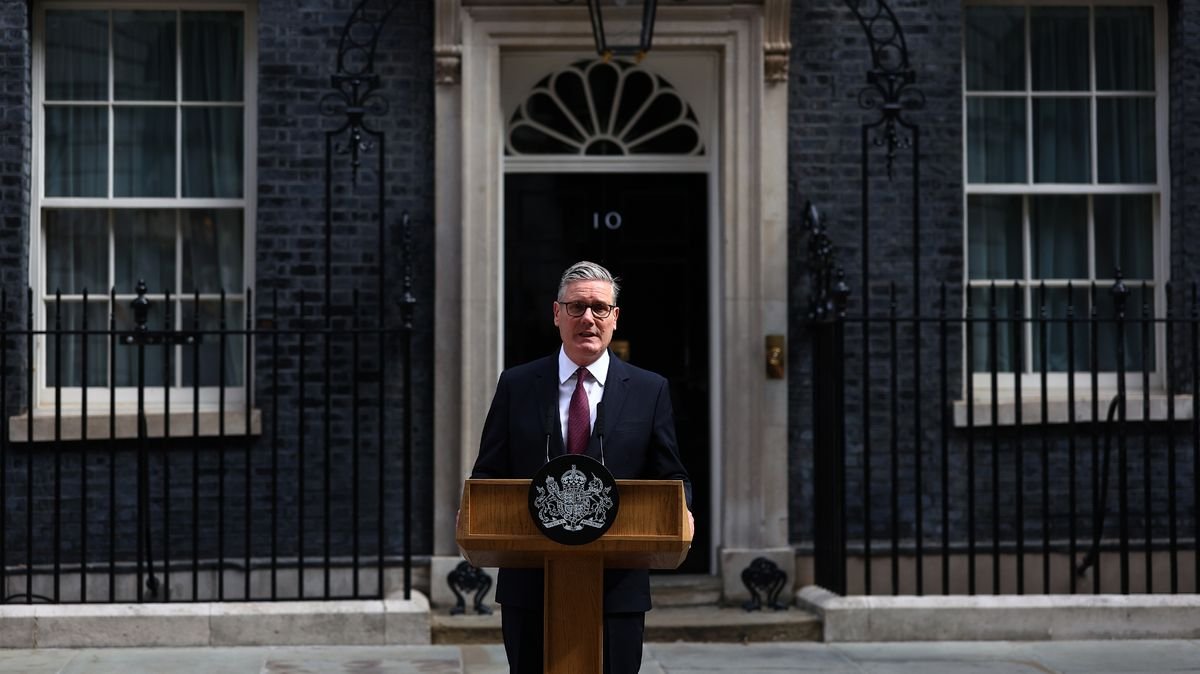
Keir Starmer has declared his intention to step down as Prime Minister, revealing his decision in a heartfelt address outside 10 Downing Street. Citing mounting pressure from fellow MPs and senior Cabinet members, Starmer expressed his readiness to resign once a new leader of the Labour Party assumes office. Following Labour’s significant victory in the general election nearly two years ago, Starmer acknowledged the party’s doubts about his leadership capabilities moving forward.
In a poignant moment, Starmer accepted his party’s verdict with humility, stating, “I have heard the answer of my parliamentary party to that question, and I accept that answer with good grace.” Emotion evident in his voice, he shared his plans to prioritize his family upon leaving office, emphasizing his commitment to being a devoted husband to his wife, Vic, and a dedicated father to his children.
The announcement coincides with Andy Burnham’s return to Westminster after winning the Makerfield by-election and expressing his interest in the top leadership position within the Labour Party. Starmer has approached the National Executive Committee (NEC) to establish a timeline for electing the party’s next leader, with nominations set to open on July 9 and close on July 16, just before the start of the summer recess.
Starmer affirmed that he will remain in his role until a new leader is elected, aiming for a smooth transition of power before Parliament reconvenes in September. However, the timing of his departure hinges on the possibility of a leadership contest. Supporters of Burnham advocate for a seamless transfer of authority to the former Greater Manchester Mayor, potentially leading to his appointment as leader and Prime Minister by mid-July if uncontested.
In a significant show of support for Burnham, former Health Secretary Wes Streeting endorsed his candidacy, underscoring the need for unity within the Labour Party to drive necessary change. Prospective leadership contenders must secure backing from at least 81 MPs, along with fulfilling other requirements such as obtaining union and local party nominations for ballot inclusion.
The ensuing process may involve candidate hustings nationwide over the summer, culminating in ballot papers being distributed to party members. A special conference is anticipated to announce the winner by late summer, with a victor determined by garnering over 50% of first preferences through successive rounds of voting. The anticipated timeline suggests a new Prime Minister could be in place by September 1, coinciding with Parliament’s resumption after the summer recess.
In summary, a coronation-style succession to Burnham’s leadership could see him assuming office by July 17, whereas a contested leadership race would likely result in the installment of a new Prime Minister by September 1.

