

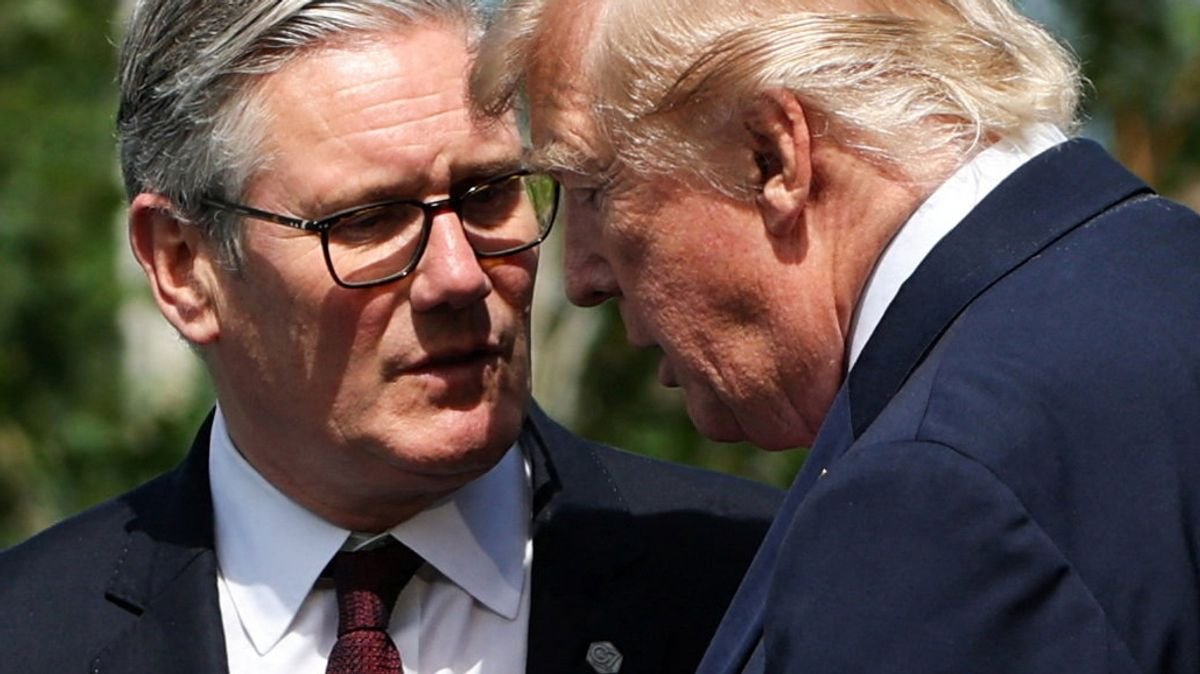
Former U.S. President Donald Trump took a final swipe at UK Prime Minister Keir Starmer today, displaying lingering resentment from their disagreement over Iran. The once-amicable relationship between Trump and Starmer soured when the UK rejected American requests to conduct military operations against Iran from British bases. Trump, feeling slighted, criticized Starmer for his decision, likening him unfavorably to Winston Churchill. Amid speculation surrounding Starmer’s leadership, Trump took to Truth Social to predict Starmer’s resignation as Prime Minister of the United Kingdom.
Trump vented his frustrations about Starmer’s perceived shortcomings in handling immigration and energy policies, particularly advocating for the resumption of North Sea oil drilling. His opposition to wind farms, stemming from a personal dispute with Scottish authorities over turbines near his golf course in Aberdeen, influenced his stance on the oil drilling issue. Despite Trump’s objections, there is no evidence that Starmer’s stance has affected his popularity in public opinion polls.
Regarding Iran, Trump issued a warning on social media, urging Iran to rein in Hezbollah to avoid severe consequences. Trump hinted at the possibility of escalating military action against Iran if provocations persisted, emphasizing a firm approach similar to recent actions. Meanwhile, Vice President JD Vance traveled to Switzerland to lead discussions aimed at solidifying the recent peace agreements with Iran. Vance emphasized the potential for transformative changes in Middle Eastern relations, underlining the importance of collaborative efforts for a lasting impact.
As discussions unfolded, Vance posed critical questions about the future direction of Middle East relations, highlighting the opportunity for positive shifts or a return to previous practices. Notably, it remained unclear whether Iranian representatives were present during Vance’s remarks. Downing Street refrained from commenting on the developments.
The evolving dynamics in international relations underscore the complexities and challenges facing global leaders as they navigate diplomatic negotiations and regional stability initiatives.

